
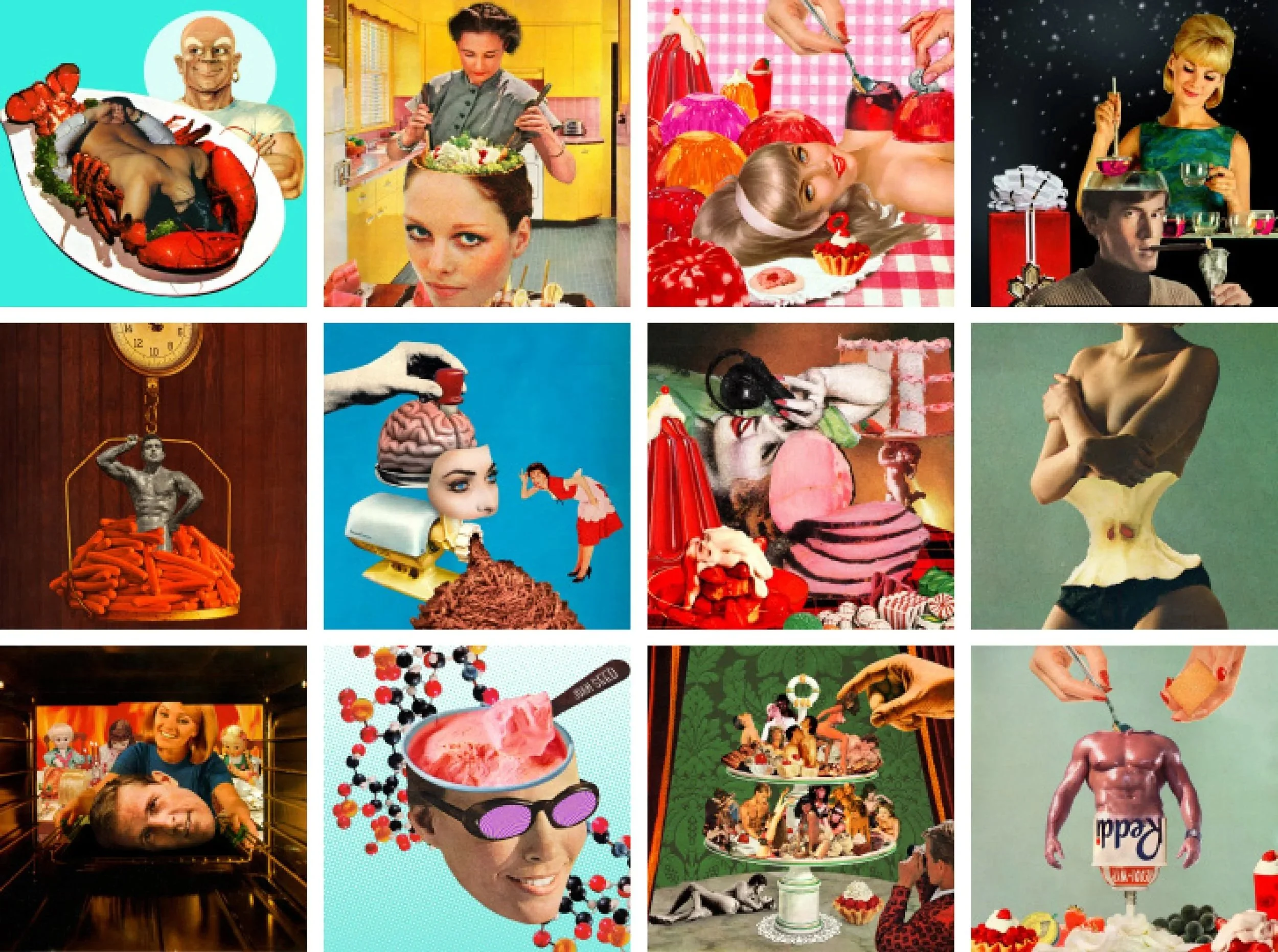
My Body is Your Communion. Eat from me | Mon corps, ta communion. Du partage à la prise.


A Love Letter from Joan
Darling,
There was a time when this was called nourishment.
They spoke of devotion. Of meals. Of what one does for others.
Somewhere between the gesture and what it becomes, something shifted.
I found myself at the table, differently.
Not quite invited.
Rather served.
Bon appétit.
Joan
A Closer Look
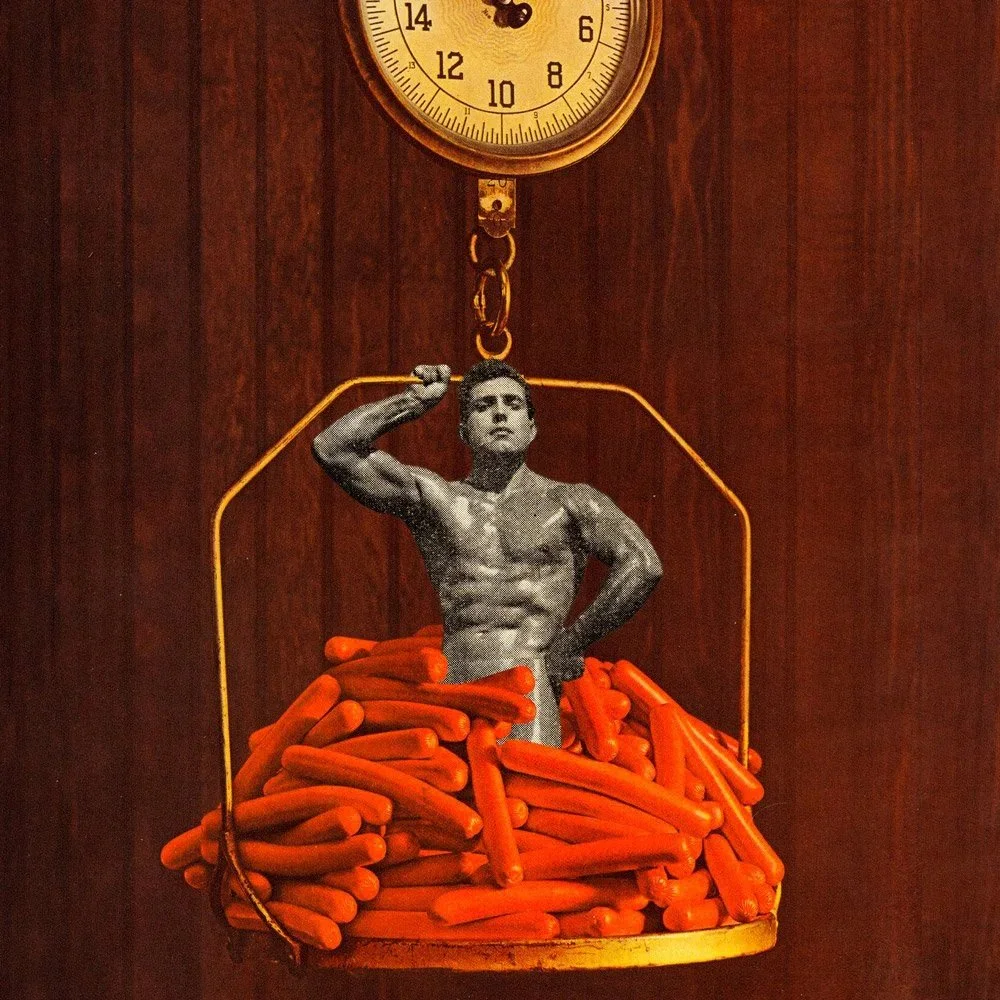
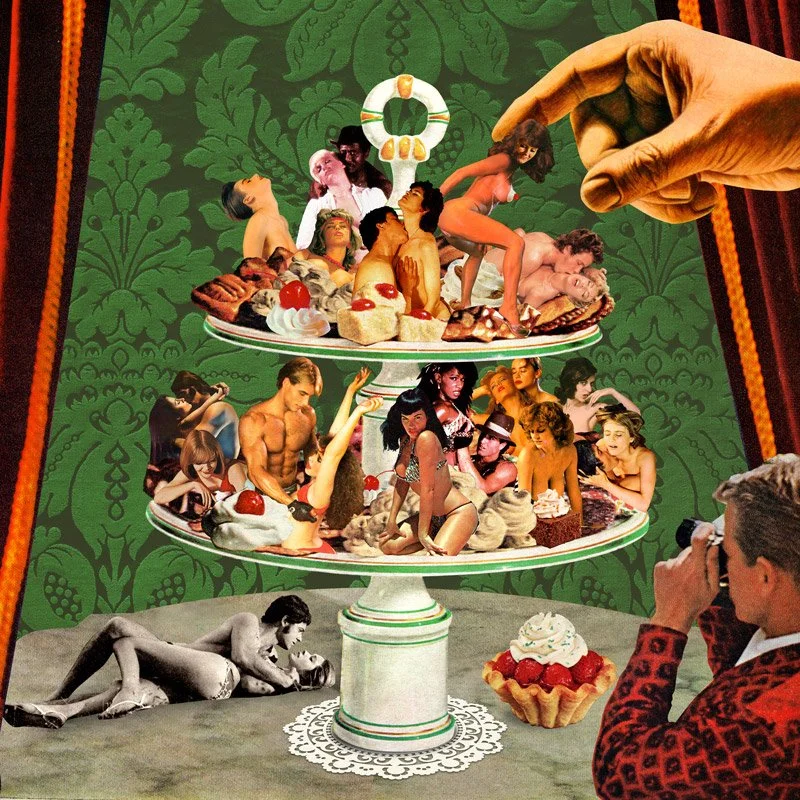
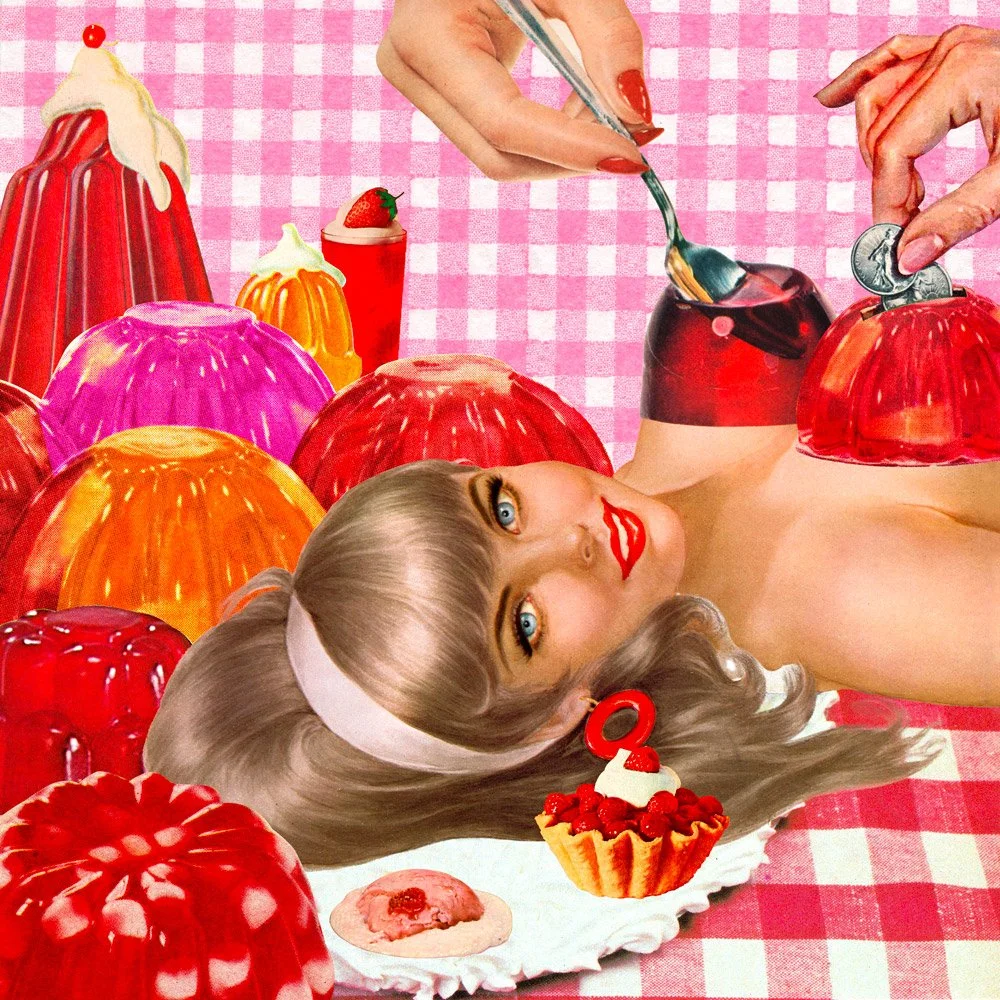
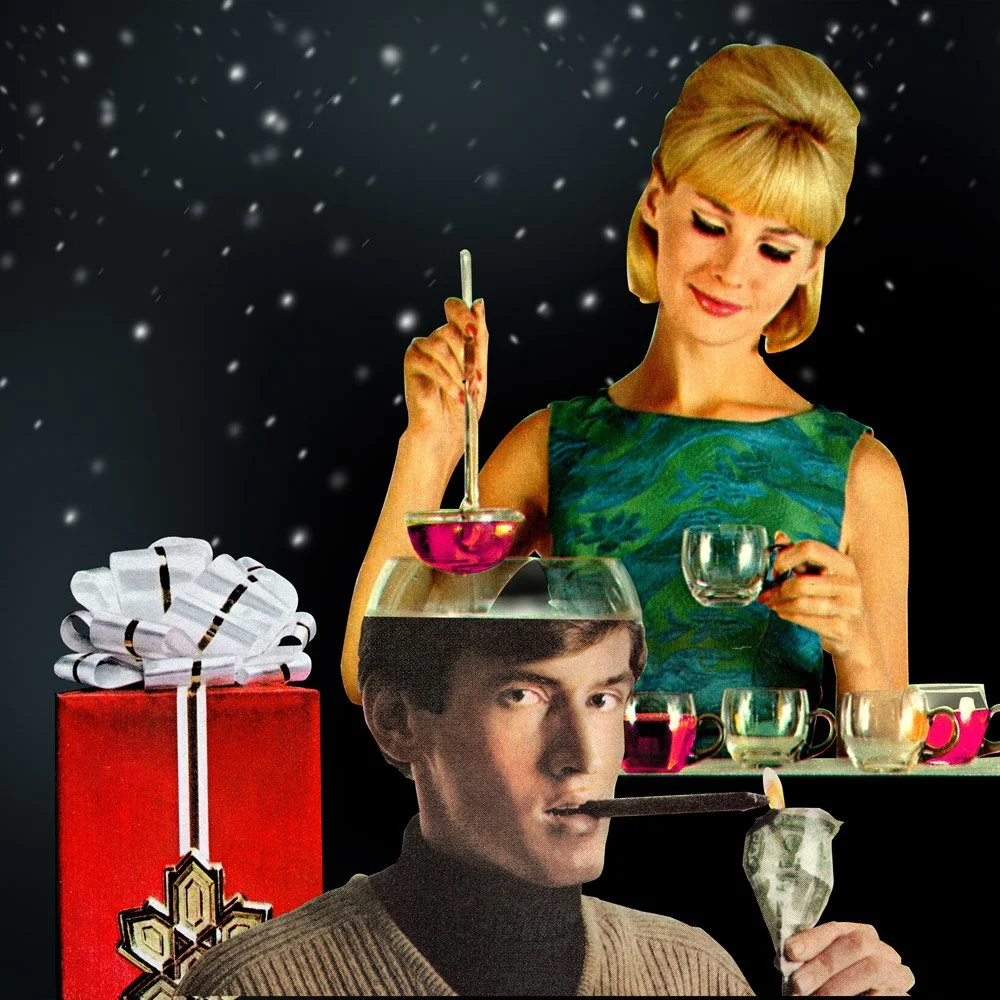
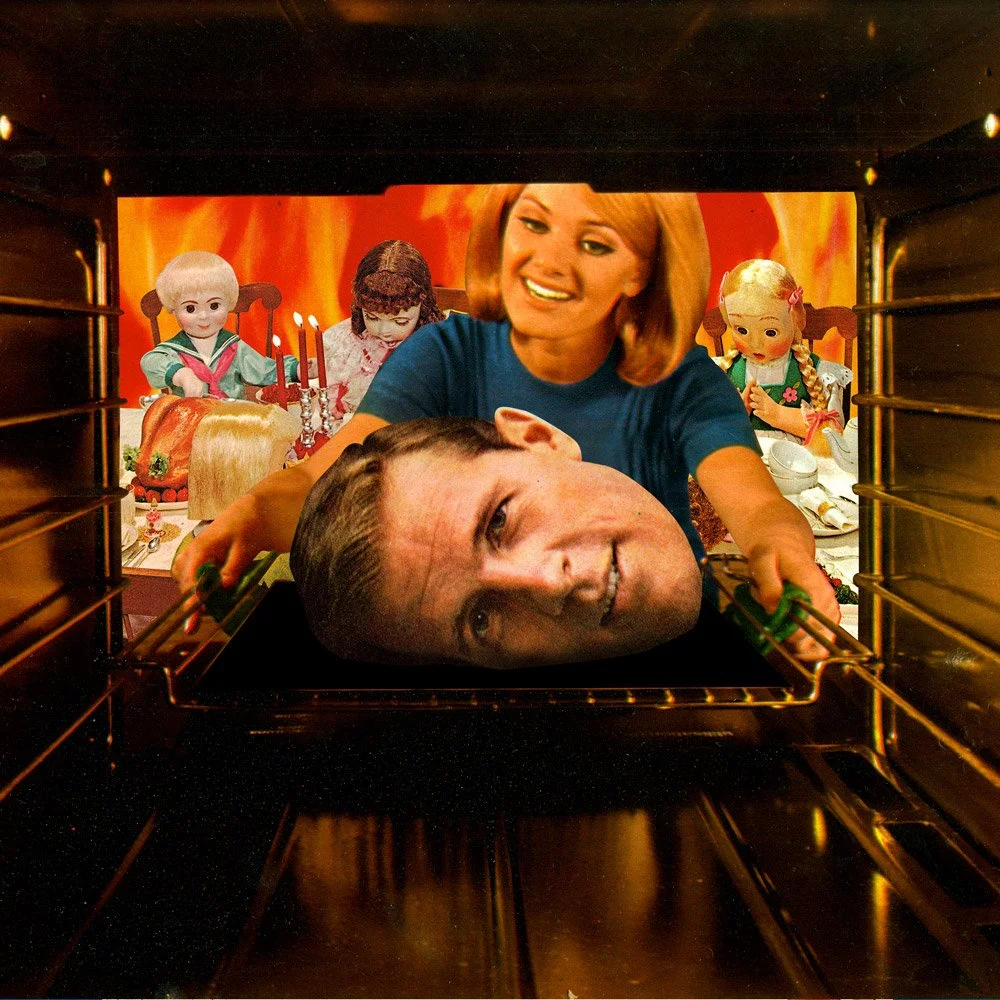
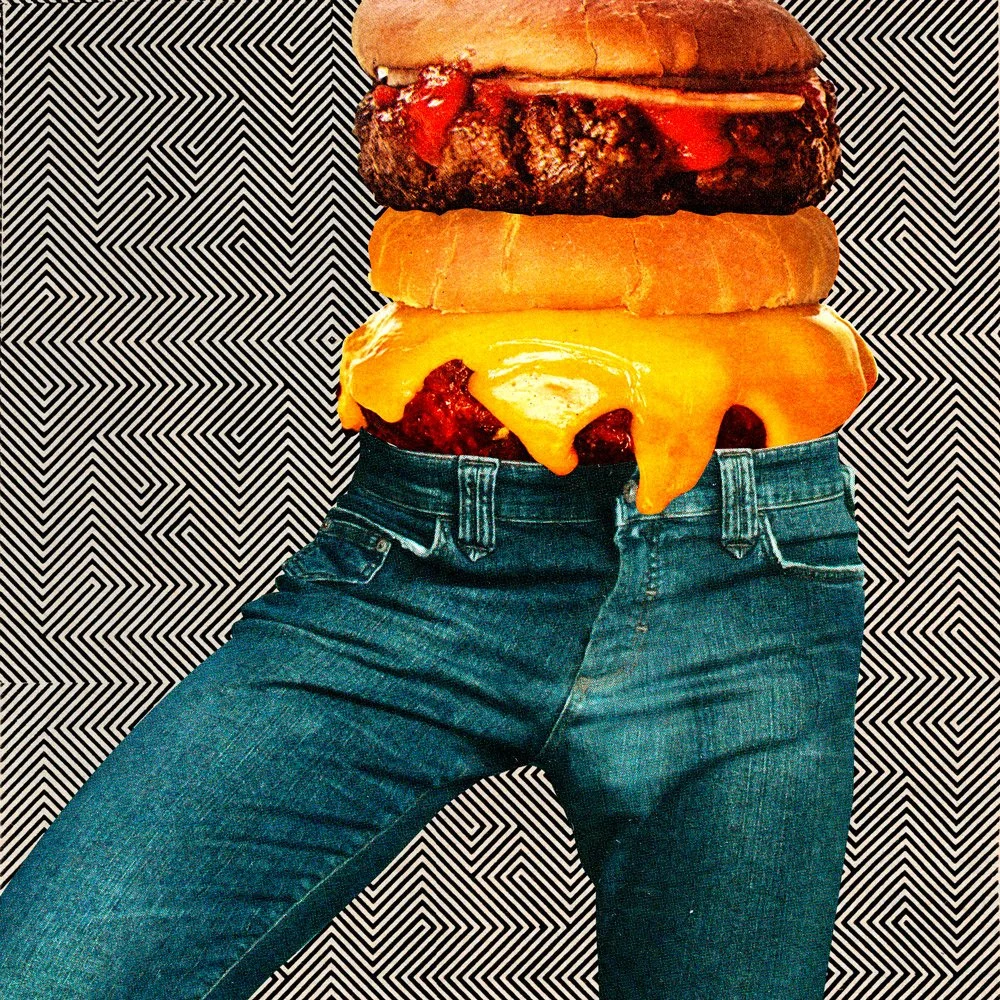
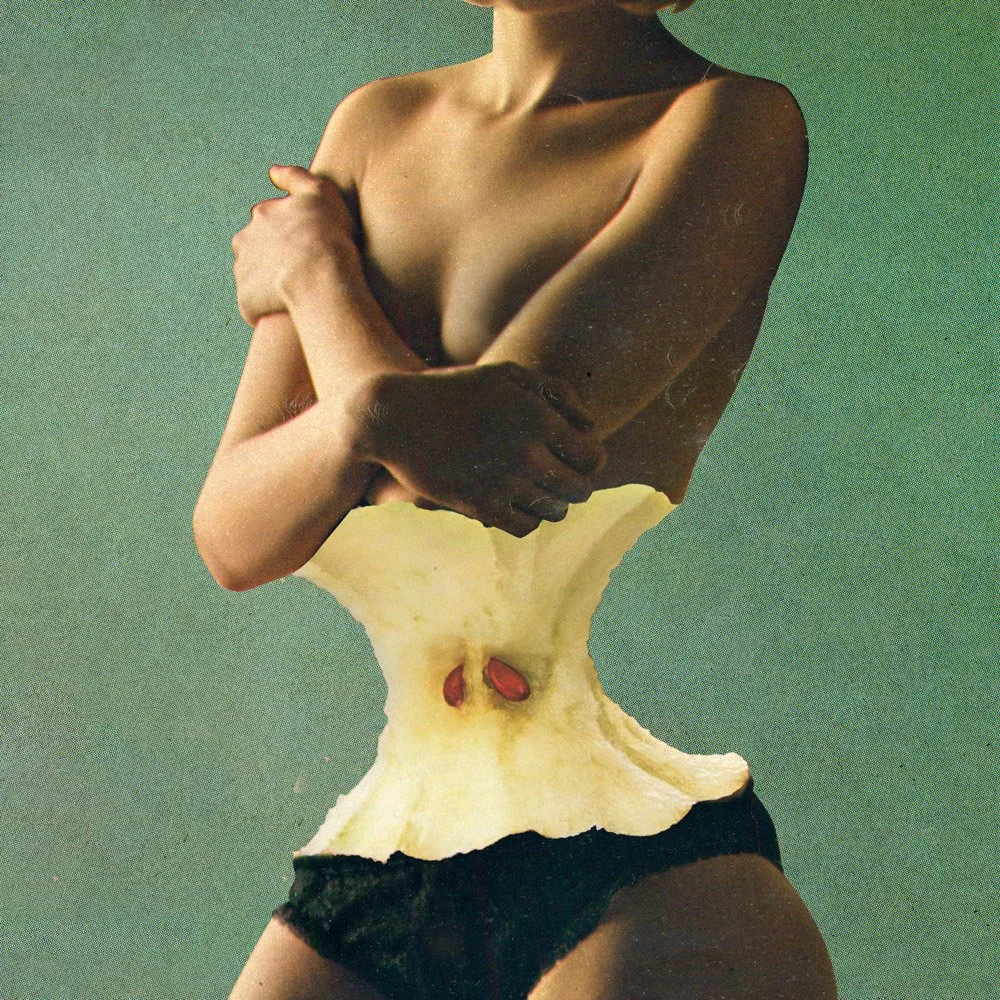
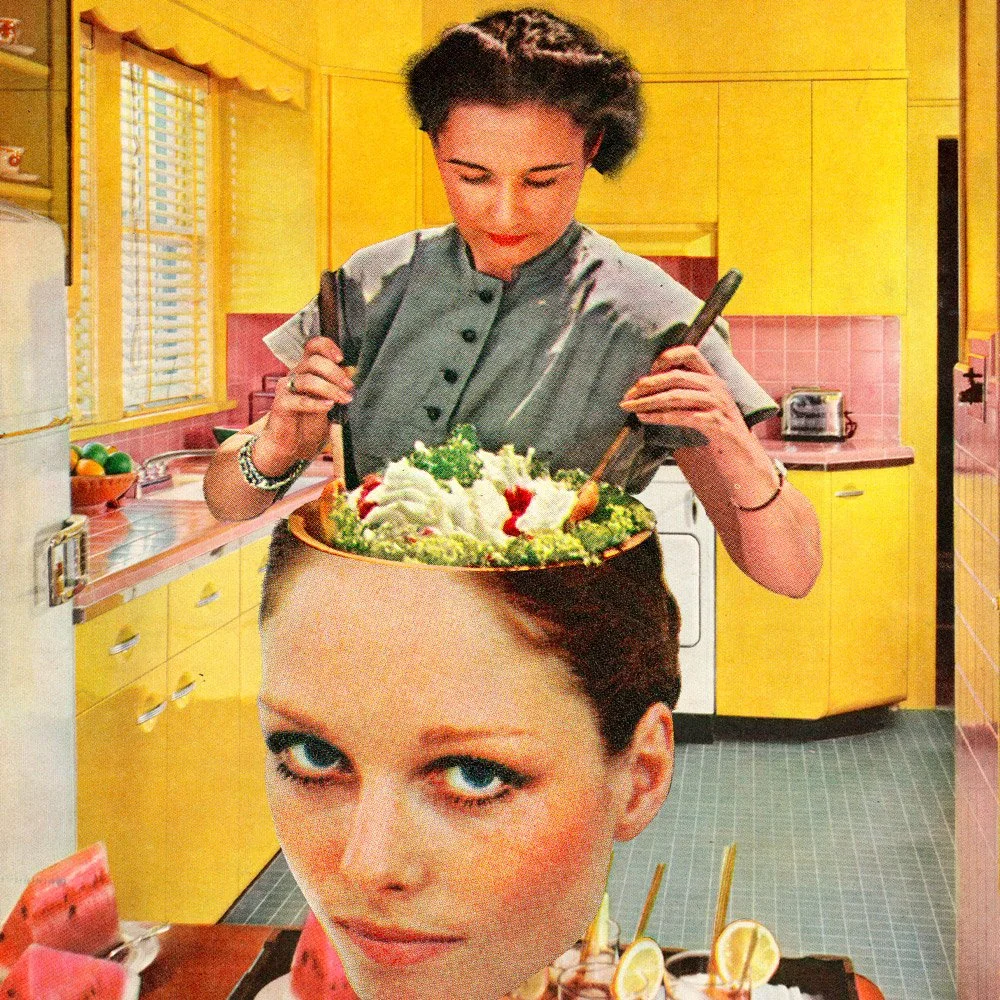
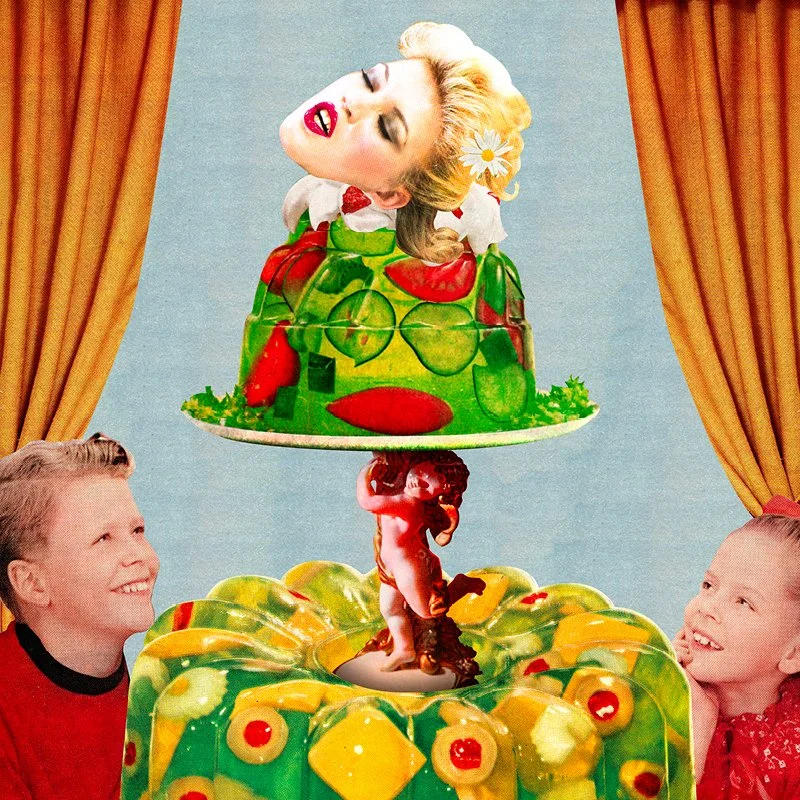
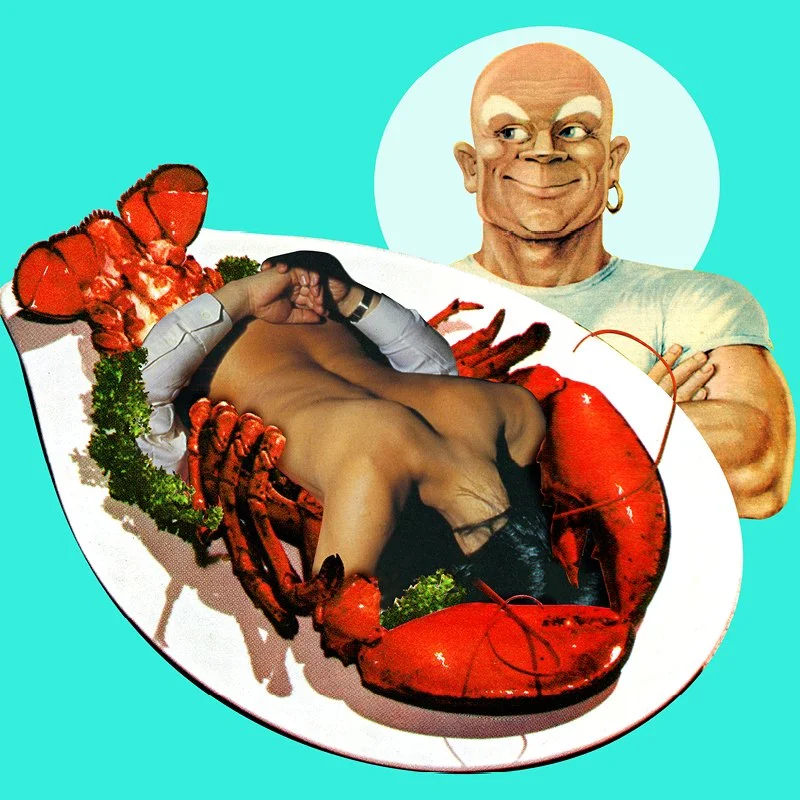
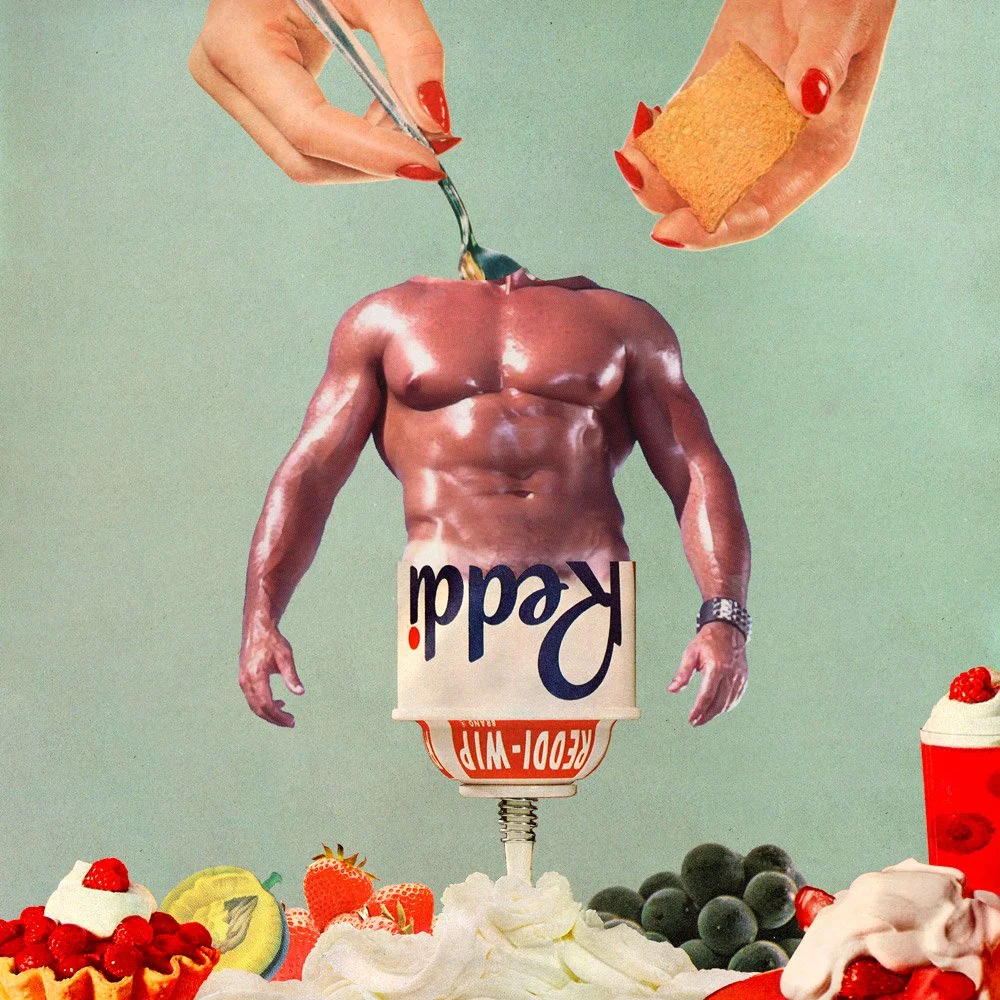
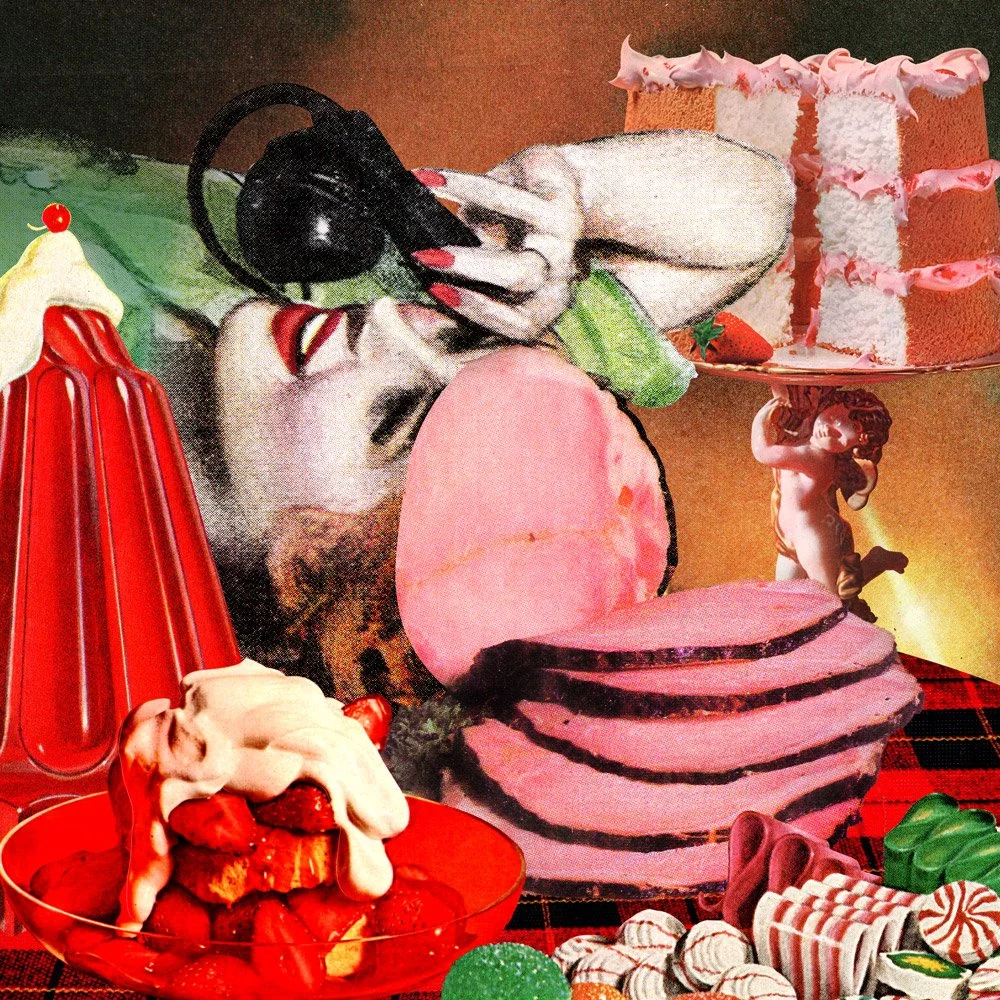
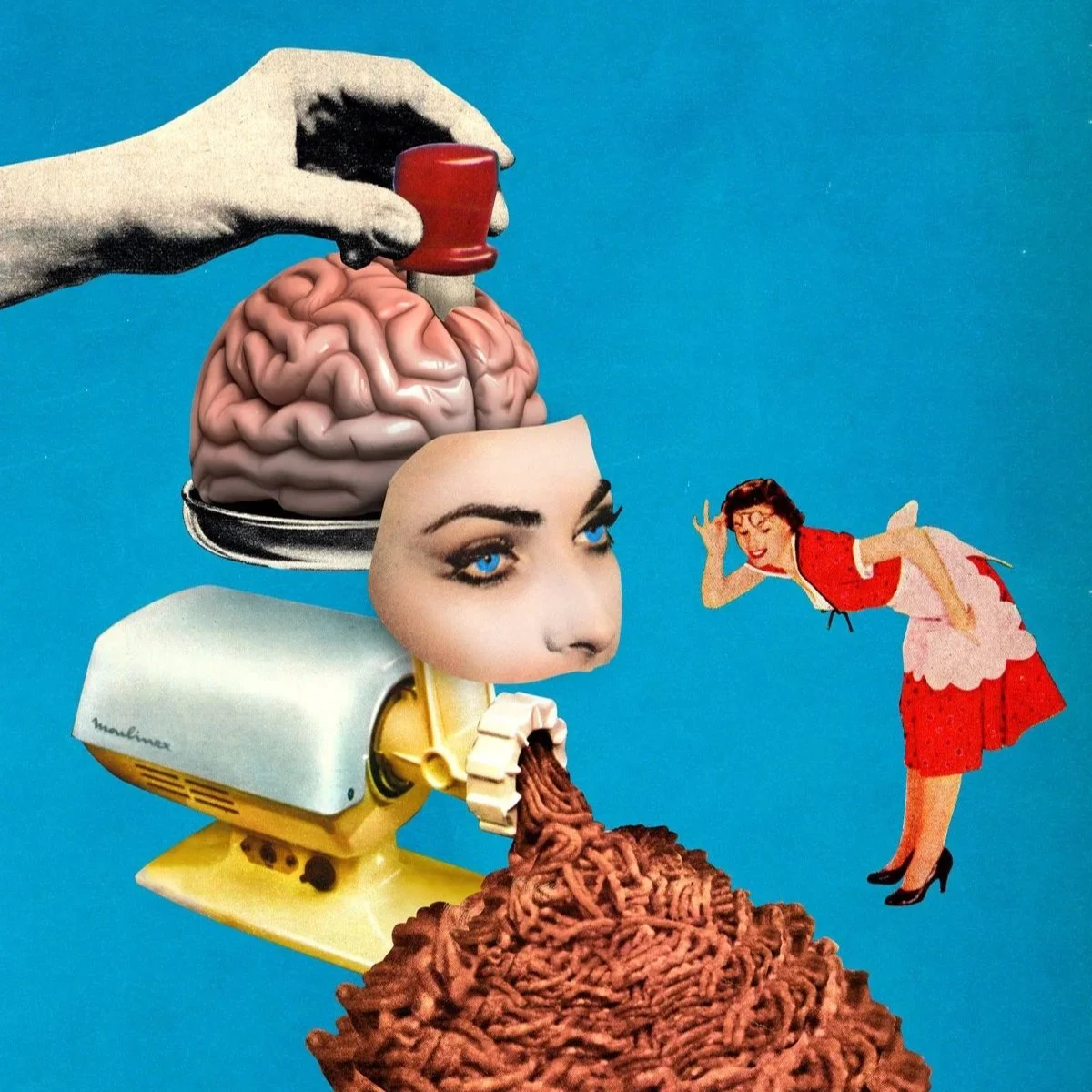
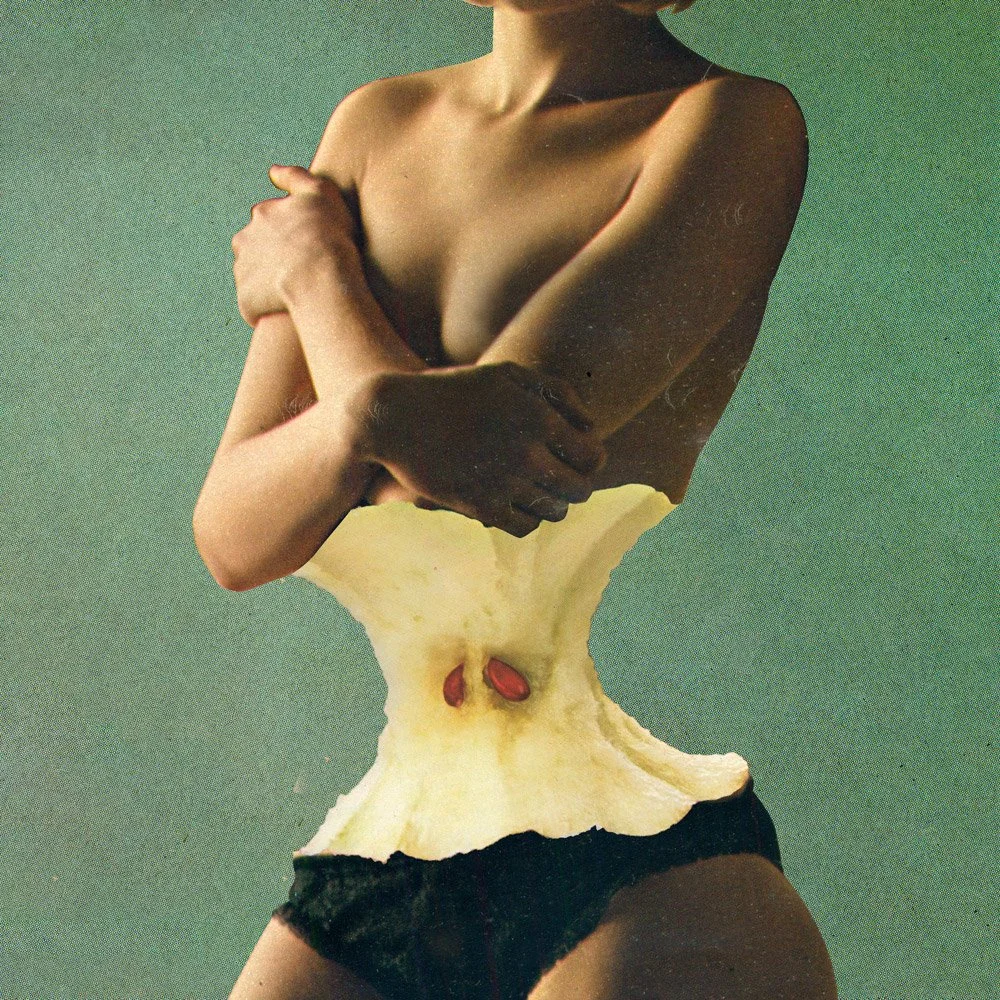
The series My Body Is Your Communion presents itself from the outset as a coherent whole. Each work revisits, in its own way, the scene of the Last Supper, where Christ offers his Body and Blood to the apostles and disciples in the form of bread and wine. As recounted in the Gospels of Mark, Matthew, and Luke, this moment marks the foundation of the Eucharist, this moment marks the foundation of the Eucharist, in which body and blood are given as a gesture of remembrance, inviting a renewal of the bond.Joan Seed draws on this structure to overturn its logic.
In each image, a figure offers their body. Others consume it, or are about to. The gesture remains legible. It suggests sharing, encounter, the possibility of connection.
Yet what unfolds moves elsewhere.
The body is presented as a site of encounter. And yet, those who approach it seem less engaged in meeting than in taking. The gesture lingers, extracts, and gradually alters the nature of the exchange. It no longer sustains a relation so much as it draws from the other whatever can be taken.
A shift occurs within the scene. The act of giving oneself moves toward a form of sacrifice—sometimes consented to, then increasingly beyond control. What was offered as presence becomes, over time, a resource.
An older reading echoes through this transformation. In the early centuries, some pagan observers took the words of the Last Supper literally, suspecting Christians of cannibalistic practices. The series draws on this imagery in a figurative mode, shifting its meaning toward contemporary relational dynamics.
As the gesture of sharing repeats itself, a certain unease sets in. The kind left by a body drained, then gradually set aside. The bond becomes harder to grasp. It seems promised, yet rarely fulfilled.
Between communion and consumption, the distance narrows. It takes very little for a bond to become a form of capture.
Context
In this series, Joan Seed explores contemporary forms of relation, exchange, and appropriation through imagery drawn from mid-century domestic and advertising culture. Using digital collage, she reworks these familiar references to reveal the tensions embedded within them. By invoking the structure of the Last Supper, she engages a deeply rooted cultural framework in which the sharing of the body is tied to the idea of communion.
Here, that structure is displaced toward more ambiguous dynamics, where connection can blur into extraction, use, or depletion. Her work aligns with traditions of surrealist collage and critical visual practices that question systems of representation. By subtly altering familiar scenes, she creates images in which the everyday begins to shift, revealing underlying relations of power, desire, and the availability of the body.
Le mot de Joan
Ma chère,
Il fut un temps où l’on appelait cela nourrir.
On parlait de dévouement. De repas. De ce qu’il faut faire pour les autres.
Entre le geste et ce qu’il devient, quelque chose s’est déplacé.
Je me suis retrouvée à table, autrement.
Pas tout à fait invitée.
Plutôt servie.
Bon appétit.
Joan
Regard sur l’œuvre
La série Mon corps, ta communion s’énonce d’emblée comme un ensemble cohérent. Toutes les œuvres rejouent, à leur manière, la scène de la Dernière Cène, où le Christ offre son Corps et son Sang aux apôtres et aux disciples sous forme de pain et de vin. Rapportée par les évangélistes Marc, Matthieu et Luc, cette scène est à l’origine de l’institution de l’Eucharistie, où le corps et le sang se donnent comme geste de mémoire et invitent à l’actualisation du lien.
Joan Seed s’en saisit pour en renverser la logique.
Dans chacune des images, une personne offre son corps. D’autres le consomment, ou s’apprêtent à le faire. Le geste reste lisible, il évoque le partage et la possibilité d’un lien.
Mais ce qui s’y joue s’en éloigne.
Le corps est présenté comme lieu de rencontre. Pourtant, celui ou celle qui s’en approche ne semble pas tant répondre à cet appel qu’y trouver matière à satisfaire un besoin plus personnel. Le geste s’attarde, prélève, jusqu’à transformer le rapport. Il cherche moins à entrer en relation qu’à tirer de l’autre ce qu’il peut en extraire.
Quelque chose se déplace alors dans la scène. Le don de soi glisse vers une forme de sacrifice, parfois consenti, puis de moins en moins maîtrisé. Ce qui s’offrait comme présence devient peu à peu ressource.
L’écho avec certaines lectures anciennes résonne. Pour certains observateurs païens des premiers siècles, les paroles de la Cène avaient été prises au pied de la lettre. Les chrétiens furent alors perçus comme des mangeurs de chair et de sang, soupçonnés de pratiques cannibales. La série en reprend l’imaginaire, sur un mode figuré, pour en déplacer la portée vers des situations relationnelles contemporaines.
À mesure que se répète le geste de partage, un certain malaise s’installe. Celui laissé par un corps vidé, puis progressivement laissé en retrait. Le lien, lui, devient plus difficile à saisir. Il semble promis, mais rarement tenu.
Entre communion et consommation, l’écart se resserre. Il suffit de peu pour que le lien se transforme en prise.
Échos contextuels
Joan Seed développe, dans cette série, une réflexion sur les formes contemporaines que prennent la relation, le don et l’appropriation, en s’appuyant sur des images issues de l’imaginaire domestique et publicitaire du milieu du XXe siècle. Par l’entremise du collage numérique, elle recompose ces références pour en révéler les tensions sous-jacentes. En convoquant la Cène et les gestes qui lui sont associés, elle met en jeu une structure culturelle profondément ancrée, où le partage du corps est lié à l’idée de communion.
Cette structure est ici déplacée vers des dynamiques plus ambivalentes, où le lien peut se confondre avec des formes d’extraction, d’usage ou d’épuisement. Le travail de Joan Seed s’inscrit dans une filiation avec le collage surréaliste et les pratiques artistiques critiques qui interrogent les systèmes de représentation. En rejouant des scènes familières et en en modifiant subtilement les codes, elle crée des images où le quotidien bascule, laissant apparaître des rapports de pouvoir, de désir et de disponibilité du corps.
Why Collage is the Perfect Art Form for the 21st Century - And How Joan Seed Reimagined Retrofuturism Through the Digital Sphere
There is perhaps no medium better suited to the psychological and cultural fragmentation of the 21st century than collage.
We live among broken narratives, recycled imagery, ideological spectacle, nostalgia loops, algorithmic identities, and collapsing distinctions between sincerity and performance. Every day, we scroll through thousands of disconnected visual fragments: advertisements, catastrophes, influencers, propaganda, political theatre, beauty rituals, religious symbolism, celebrity scandals, war footage, and curated intimacy. Contemporary life already exists as collage.
So it makes sense that collage has re-emerged not as a marginal medium, but as one of the defining visual languages of our era.
For artist Joan Seed, collage is not simply an aesthetic technique. It is archaeology.
Working primarily through digital mixed-media collage, Joan Seed cuts, curates, archives, distorts, and recontextualizes vintage magazine imagery, forgotten advertisements, mid-century photography, religious iconography, political symbolism, and retro ephemera into surreal compositions charged with tension, irony, seduction, and collapse.
Each work emerges from hundreds — sometimes thousands — of collected visual fragments.
Not assembled randomly, but excavated.
The process resembles cultural forensics more than illustration. Images are pulled from their original contexts and stripped of certainty. A smiling housewife becomes something eerie. A beauty advertisement mutates into satire. A religious symbol drifts into absurdity. Masculinity softens. Power becomes theatrical. Desire becomes grotesque. Nostalgia begins to rot at the edges.
The result is a body of work that feels simultaneously vintage and disturbingly contemporary.
This is where Joan Seed’s practice begins to move beyond traditional retrofuturism.
Historically, retrofuturism imagined optimistic futures through the lens of the past: chrome utopias, atomic-age fantasy, neon modernism, consumer optimism, technological glamour. But Joan Seed transforms retrofuturism into something stranger and psychologically unstable.
In her work, the future has already happened — and failed beautifully.
The glamour remains, but it flickers. The fantasy deteriorates. Consumer mythology collapses into performance, spectacle, and longing. Mid-century optimism becomes haunted by contradiction.
Rather than presenting nostalgia as comfort, Joan Seed exposes it as a carefully staged hallucination.
And perhaps that is what makes collage so essential today.
Painting often seeks cohesion. Photography can imply truth. But collage openly admits rupture. It acknowledges that meaning itself has become unstable.
The contemporary self is assembled from fragments:
memory, branding, irony, performance, trauma, advertising, aesthetics, politics, sexuality, aspiration, and cultural residue.
Collage mirrors this condition perfectly.
In Joan Seed’s work, images rarely resolve into singular interpretations. Instead, they oscillate between seduction and discomfort, humor and menace, sincerity and parody. A work may initially appear playful before revealing violence underneath. Another may appear absurd before exposing emotional vulnerability.
This instability is intentional.
The viewer is not meant to passively consume the image. They are implicated within it.
A Joan Seed collage often functions like a psychological trap disguised as visual pleasure.
And yet, despite the conceptual weight of the work, irreverence remains central to the practice.
Humor matters.
Camp matters.
Absurdity matters.
Because contemporary culture itself often feels absurd.
Joan Seed understands that satire can sometimes reveal more truth than solemnity ever could. Her works frequently flirt with blasphemy, glamour, eroticism, consumer spectacle, tabloid aesthetics, and visual excess precisely because these are the languages modern culture already speaks fluently.
The sacred collides with kitsch.
The political collides with theatricality.
The beautiful collides with the grotesque.
And somewhere between those collisions, meaning emerges.
Or falls apart.
Sometimes both.
The studio process itself reflects this strange coexistence between seriousness and absurdity. After hours spent dissecting visual culture, researching references, collecting imagery, and constructing symbolic relationships between fragments, there are moments where the entire practice borders on delirium.
At some point, inevitably, you find yourself rolling around naked on a polar bear rug with a glass of wine in hand, reminiscing about past “relationShits,” wondering how human beings became emotionally dependent on glowing rectangles and self-branding rituals.
And honestly, that too feels very 21st century.
Perhaps this is why collage feels uniquely equipped to speak to contemporary life.
Unlike cleaner or more controlled mediums, collage embraces contradiction. It allows multiple realities to coexist simultaneously without forcing resolution. It mirrors the overstimulation, fragmentation, nostalgia, and psychological layering of contemporary existence.
The medium understands excess because it is built from excess.
Joan Seed’s work ultimately asks what happens when a culture becomes unable to distinguish spectacle from identity, performance from authenticity, desire from conditioning.
The answer is rarely comforting.
But it is visually unforgettable.
And maybe that is the role of collage now:
not to repair fragmentation,
but to reveal it beautifully.
– Giovanna Nicolo
Pourquoi le collage est la forme d’art idéale pour le XXIe siècle
Et comment Joan Seed réinvente le rétrofuturisme à travers le collage numérique
Il existe peu de formes d’art aussi bien adaptées à la fragmentation psychologique et culturelle du XXIe siècle que le collage.
Nous vivons au milieu de récits éclatés, d’images recyclées, de spectacles idéologiques, de boucles nostalgiques et d’identités façonnées par les algorithmes. Les frontières entre sincérité et performance deviennent de plus en plus poreuses.
Chaque jour, nous faisons défiler des milliers de fragments visuels déconnectés les uns des autres : publicités, catastrophes, influenceur·ses, propagande, théâtre politique, rituels de beauté, symboles religieux, scandales de célébrités, images de guerre et formes d’intimité soigneusement mises en scène.
La vie contemporaine ressemble déjà à un immense collage.
Il n’est donc pas surprenant que le collage soit réapparu non plus comme une pratique artistique marginale, mais comme l’un des langages visuels emblématiques de notre époque.
Pour Joan Seed, le collage n’est pas simplement une technique esthétique. C’est une forme d’archéologie.
Travaillant principalement à partir de collages numériques et d’œuvres mixtes, Joan Seed découpe, archive, détourne et recontextualise des images issues de magazines anciens, de publicités oubliées, de photographies du milieu du siècle, d’iconographie religieuse, de symboles politiques et d’éphémères rétro pour composer des scènes surréalistes chargées de tension, d’ironie, de séduction et de désagrégation.
Chaque œuvre prend forme à partir de centaines – parfois de milliers – de fragments visuels collectés, archivés et traversés au fil du temps.
Rien n’est assemblé au hasard. Tout est exhumé.
Le processus tient moins de l’illustration que de l’enquête culturelle. Les images sont arrachées à leur contexte d’origine, puis délestées de leurs certitudes. Une ménagère souriante devient inquiétante. Une publicité de produits de beauté glisse vers la satire. Un symbole religieux bascule dans l’absurde. La masculinité se trouble. Le pouvoir prend des allures de performance. Le désir finit par se déformer. La nostalgie commence à avoir des relents de moisissure.
Le résultat donne naissance à un corpus d’œuvres qui paraît à la fois profondément rétro et étrangement contemporain.
C’est précisément là que la pratique de Joan Seed commence à dépasser le simple rétrofuturisme.
Historiquement, le rétrofuturisme imaginait le futur à travers les espoirs du passé : utopies chromées, fantasmes atomiques, modernisme néon, optimisme consumériste et glamour technologique. Joan Seed transforme toutefois cet héritage en quelque chose de plus instable, de plus psychologique.
Dans ses œuvres, le futur a déjà eu lieu – et il a magnifiquement échoué.
Le glamour demeure, mais vacille. Le fantasme se détériore. Les mythologies de consommation se confondent avec la performance, le spectacle et le manque. L’optimisme du milieu du siècle devient hanté par ses propres contradictions.
Plutôt que de présenter la nostalgie comme une forme de réconfort, Joan Seed la révèle comme une hallucination soigneusement mise en scène.
Et c’est peut-être également ce qui rend le collage si essentiel aujourd’hui.
La peinture cherche souvent la cohérence. La photographie peut donner l’impression d’une vérité. Le collage, lui, assume ouvertement la rupture. Il reconnaît que le sens lui-même est devenu instable.
L’identité contemporaine se construit désormais à partir de fragments : souvenirs, marques, ironie, performance, traumatismes, publicité, esthétique, politique, sexualité, aspirations et résidus culturels.
Le collage reflète parfaitement cette condition.
Dans les œuvres de Joan Seed, les images se prêtent rarement à une interprétation unique. Elles oscillent plutôt entre séduction et malaise, humour et menace, sincérité et parodie. Une œuvre peut d’abord sembler ludique avant de révéler une forme de violence sous-jacente. Une autre peut paraître absurde avant de laisser apparaître une vulnérabilité plus intime.
Cette instabilité est intentionnelle.
Le regardeur n’est pas censé consommer passivement l’image. Il se retrouve impliqué à l’intérieur même de ses contradictions.
Un collage de Joan Seed fonctionne souvent comme une forme de vertige psychologique déguisée en plaisir visuel.
Et malgré toute la densité conceptuelle de cette pratique, l’irrévérence demeure essentielle.
L’humour compte.
L’esthétique camp compte.
L’absurde compte.
Parce que la culture contemporaine elle-même paraît souvent absurde.
Joan Seed comprend que la satire peut parfois révéler davantage de vérité que le sérieux le plus solennel. Ses œuvres flirtent régulièrement avec le blasphème, le glamour, l’érotisme, le spectacle consumériste, l’esthétique tabloïde et l’excès visuel précisément parce qu’il s’agit déjà des langages que la culture contemporaine maîtrise le mieux.
Le sacré entre en collision avec le kitsch.
Le politique se confond avec la théâtralité.
Le beau glisse vers le grotesque.
Et quelque part dans ces collisions, du sens émerge.
Ou se désagrège.
Parfois les deux.
Le studio lui-même reflète cette étrange coexistence entre sérieux et absurdité. Après des heures passées à disséquer la culture visuelle, à rechercher des références, à collectionner des images et à construire des liens symboliques entre les fragments, il arrive que tout le processus frôle le délire.
À un certain moment, inévitablement, on se retrouve à rouler nu·e sur un tapis en peau d’ours polaire, un verre de vin à la main, à repenser à ses anciennes « relationShits » tout en se demandant comment les êtres humains sont devenus émotionnellement dépendants de rectangles lumineux et de rituels d’autopromotion.
Et honnêtement, cela aussi paraît très XXIe siècle.
Voilà sans doute pourquoi le collage semble aujourd’hui particulièrement apte à parler du monde contemporain.
Contrairement à des formes d’art plus contrôlées ou plus lisses, le collage accueille la contradiction. Il permet à plusieurs réalités de coexister simultanément sans chercher à les résoudre complètement. Il reflète la surcharge, la fragmentation, la nostalgie et les multiples couches psychologiques qui composent désormais l’existence contemporaine.
Le collage comprend l’excès parce qu’il est lui-même construit à partir de l’excès.
Au fond, le travail de Joan Seed pose une question simple : que se produit-il lorsqu’une culture devient incapable de distinguer le spectacle de l’identité, la performance de l’authenticité, ou le désir du conditionnement?
La réponse est rarement rassurante.
Mais elle demeure visuellement inoubliable.
Et c’est peut-être là le rôle du collage aujourd’hui : révéler la fragmentation dans toute sa beauté troublante.
Texte : Gio. N.
Traduction : L. M.
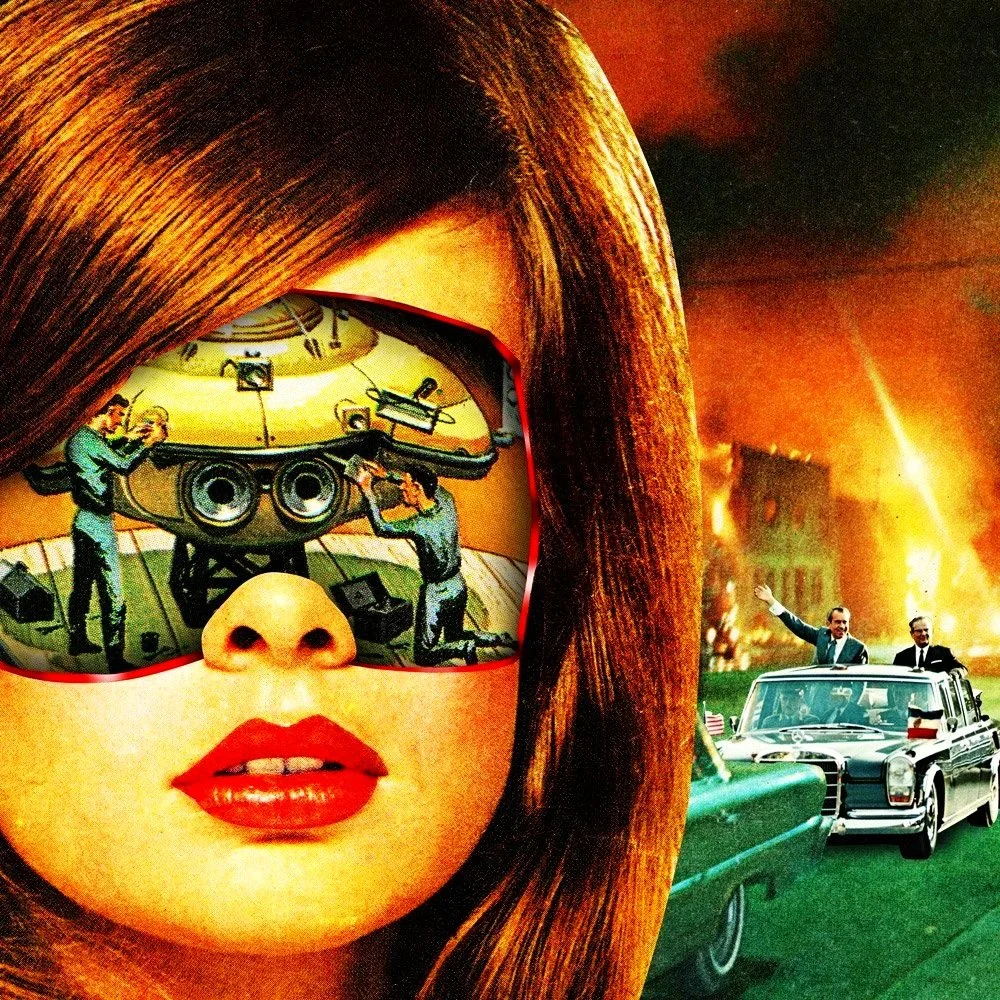
The Women in Joan Seed Are Rarely Victims | The Femme Fatale as Cultural Mirror
The women in Joan Seed’s collages are rarely victims.
At first glance, they may appear familiar: the glamorous blonde, the cabaret apparition, the lipstick ghost, the dangerous woman with excellent posture. Cinema has trained us to recognize these figures instantly. It has also trained us to distrust them.
Yet Joan Seed’s women refuse to behave properly inside these inherited narratives.
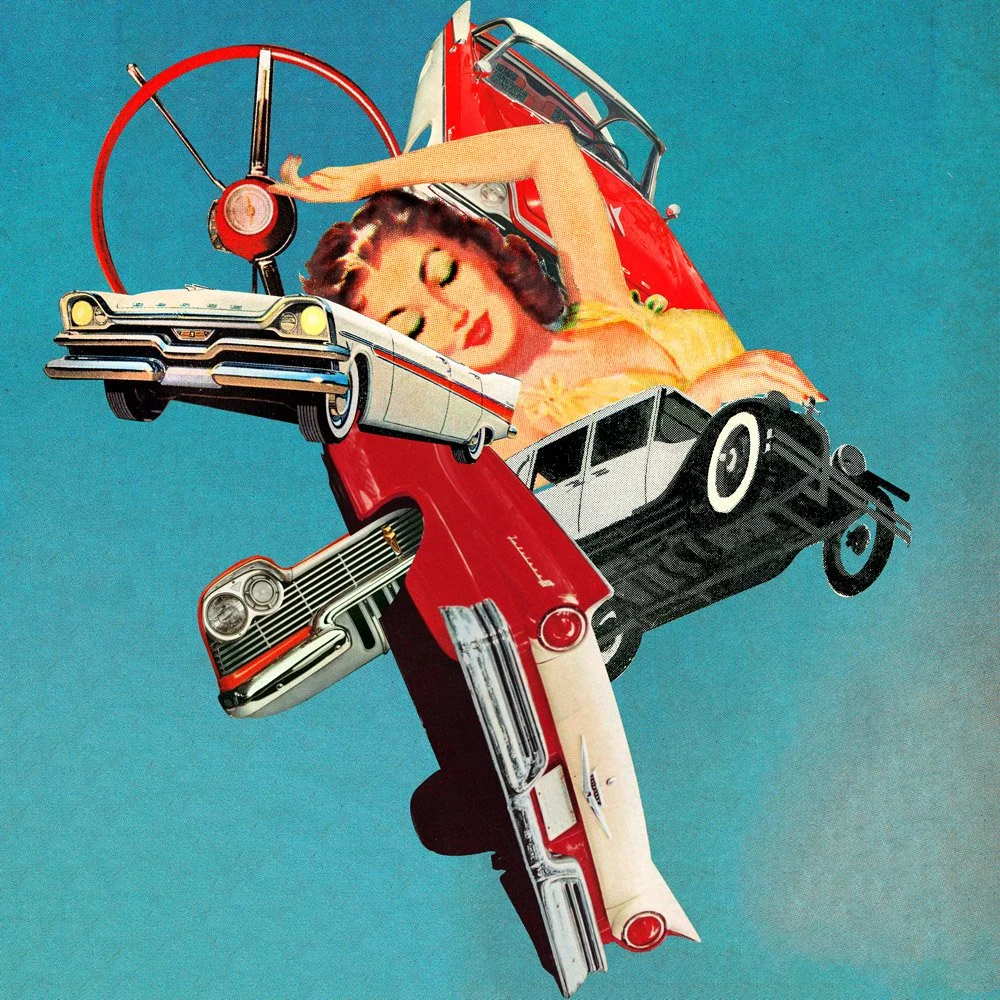
Rather than serving as decorative objects within scenes of spectacle and collapse, they often become observers of it. They watch. They study. They linger in the uneasy space between participation and detachment. In works such as Lola at the Copacabana, Under Cover, Cold Head, Sleeping at the Wheel, and Sally Sniper, female figures appear less interested in performing for the audience than in quietly examining the structures around them.
This subtle shift changes everything.
The classic femme fatale reflected cultural anxieties about modernity, desire, autonomy, and control. Joan Seed inherits this visual language but redirects it. Her women are rarely the source of catastrophe. More often, they are witnesses to systems already collapsing under their own contradictions.
They are glamorous, fragmented, observant, ironic, exhausted, amused, seductive, complicit, and occasionally terrifying.
In other words, they are human.
Perhaps this is why they remain so unsettling. A woman who notices things too clearly has always made culture nervous.
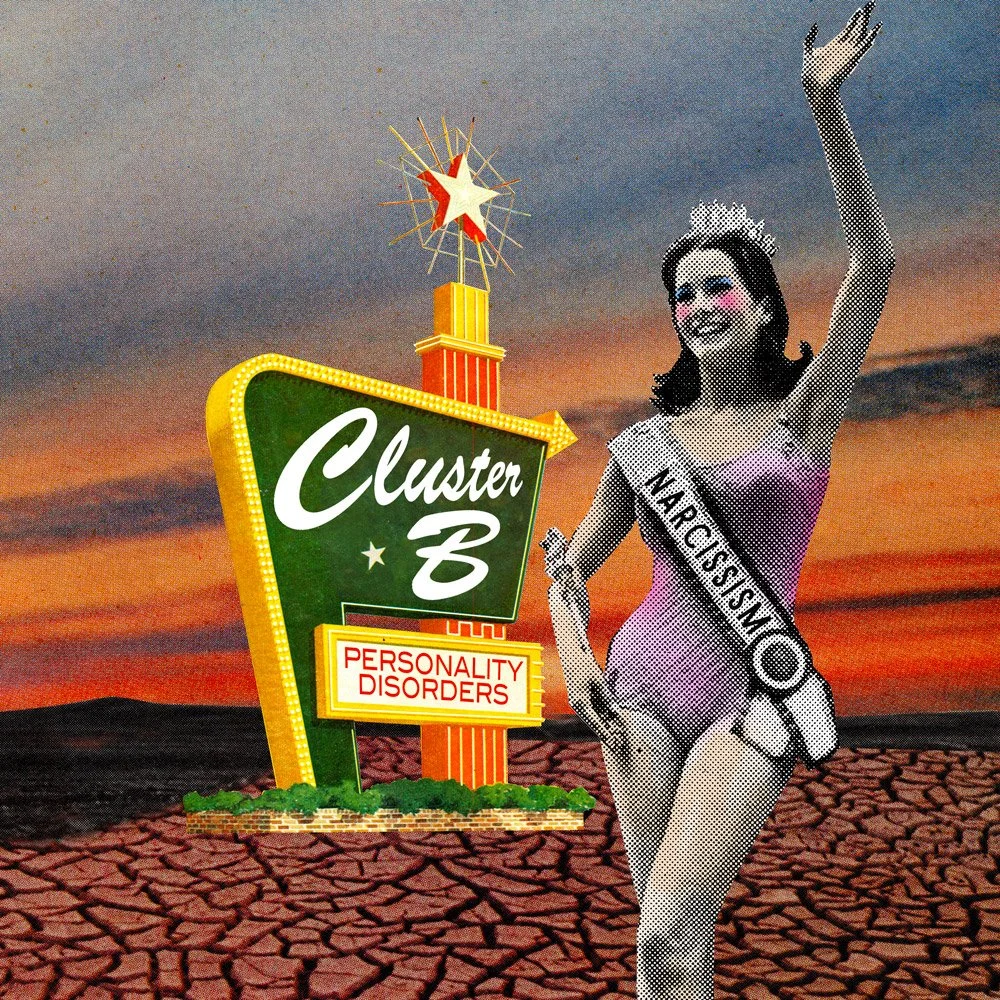
Film Noir Never Ended — It Just Learned Better Lighting
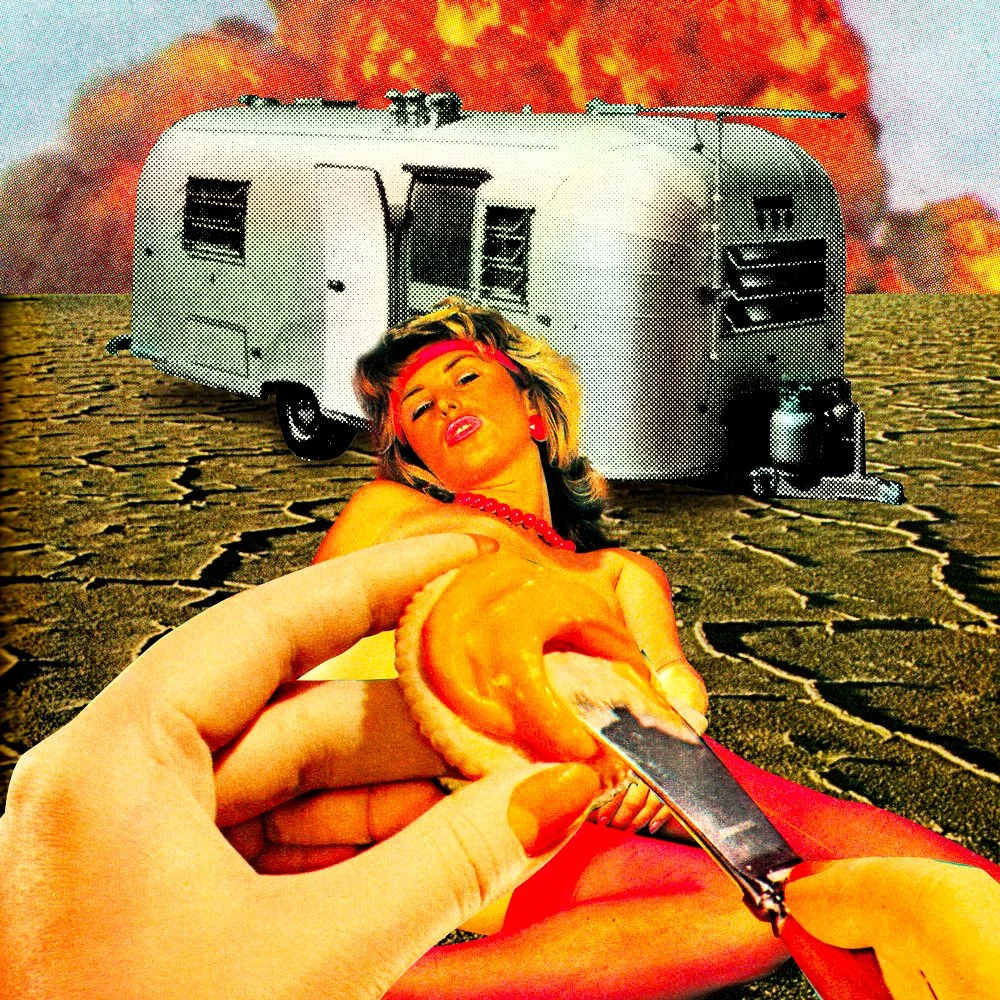
Explore how film noir never truly disappeared in this editorial essay on the surreal collage work of Joan Seed. Blending retro advertising aesthetics, neo-noir cinema, pop surrealism, and conceptual art, the article examines themes of glamour, paranoia, consumer mythology, loneliness, and social collapse through works such as Cluster B Motel, Ride the Snake, Under Cover, and Lola at the Copacabana. Referencing David Lynch, Sunset Boulevard, Double Indemnity, and mid-century advertising culture, the essay positions Joan Seed’s work within a contemporary noir tradition shaped by satire, nostalgia, femininity, and psychological tension.
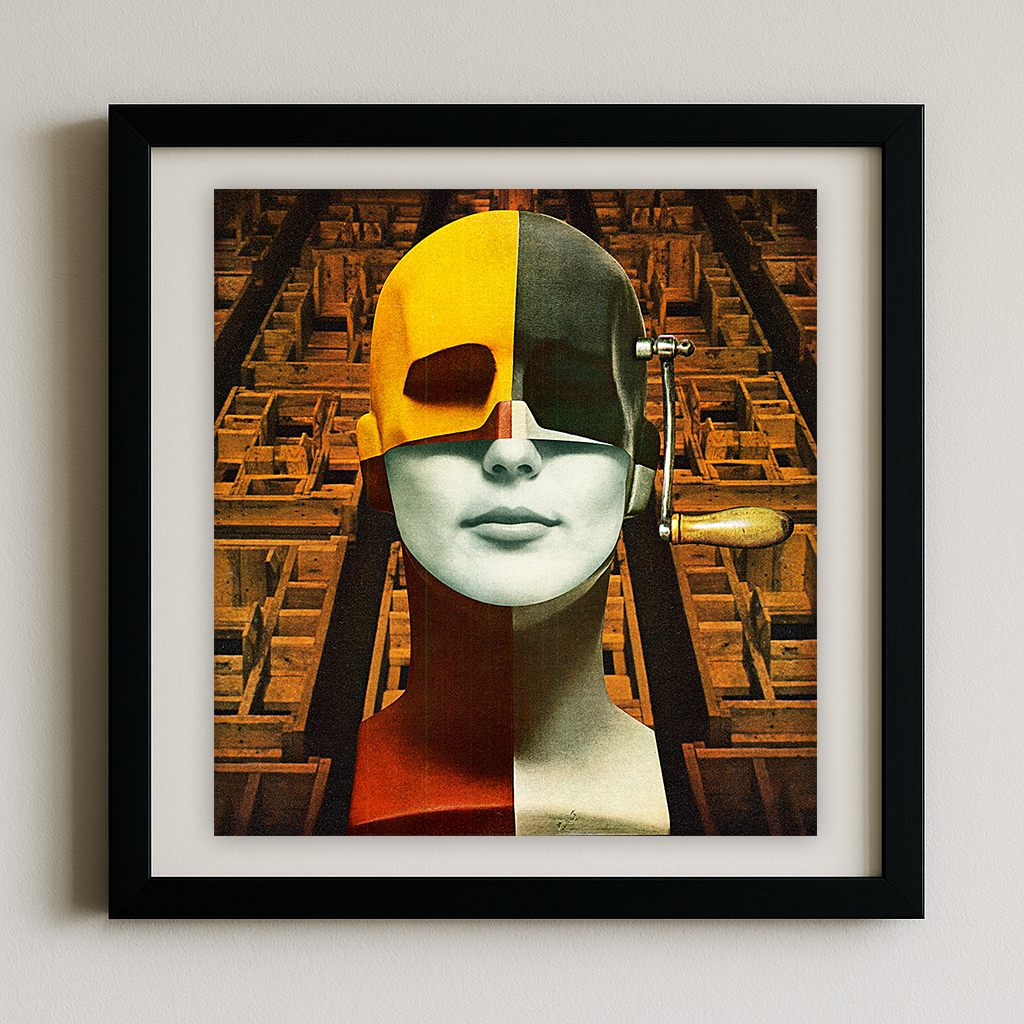
Why Collage Is the Perfect Art Form for the 21st Century - And How Joan Seed Reimagined Retrofuturism Through Fragments of The Digital Form Through Digital Collage
Explore why collage has become one of the defining art forms of the 21st century through the surreal retrofuturist work of Joan Seed. This editorial essay examines digital collage, pop surrealism, nostalgia, consumer culture, advertising aesthetics, satire, and psychological fragmentation through Joan Seed’s conceptual mixed-media practice. Blending vintage imagery, noir glamour, irony, and social commentary, the article positions collage as a powerful contemporary medium for exploring identity, spectacle, performance, and cultural collapse.
Beauty in an Overdesigned World: Joan Seed on Taste, Irony, and Imperfection
Beauty in an Overdesigned World: Joan Seed on Taste, Irony, and Imperfection — A meditation on beauty, irony, glamour, and resistance in an age of overdesigned interiors, artificial optimism, consumer spectacle, and curated perfection. Through surreal collage and cultural critique, Joan Seed explores film noir aesthetics, vintage advertising, feminine archetypes, decay, imperfection, and the strange poetry hidden inside modern visual culture.
What Inspires Joan (When Everything Is Violently Ugly)
Joan insists she is not a pessimist. She simply owns a very clear pair of glasses.
Through them, the world appears aggressively eager to disappoint: branding so loud it becomes mute, interiors so beige they appear to apologize for existing, optimism packaged in plastic fonts and sold at a premium. Everywhere one looks, things have been simplified until they are no longer simple — merely vacant.
Joan calls this condition violently ugly. Not because things are unpleasant in the traditional sense, but because they feel insistent. Ugly with ambition. Ugly that wants applause.
There is, she says, a special kind of exhaustion produced by objects that try too hard to charm you.
The modern object pleads. The modern slogan beams. The modern room smiles in a way that suggests orthodontics were involved.
It is difficult to feel romance in the presence of something that has already congratulated itself.
A Small Defense of Difficulty
Joan finds beauty in resistance.
She admires things that require a moment of adjustment — a chair that does not immediately flatter the sitter, a color that seems wrong until one lives with it, a silence that is not filled out of politeness.
Beauty, to Joan, has always possessed a slight hostility. Not rudeness — merely independence.
Dorothy Parker understood this principle perfectly. A well-placed sentence could wound gently enough to leave the reader grateful. Joan aspires to similar elegance: a small incision, expertly delivered.
Nothing improves the complexion of truth like a touch of irony.
The Discipline of Looking Again
Where others see ruin, Joan sees editing.
A cracked wall becomes a biography. Tarnished silver develops moral authority. Even a wilted flower begins to look like it has something to say about time — and the management of expectations.
Joan’s work often begins with the assumption that beauty is hiding behind a minor scandal.
One must simply allow the object to confess.
She does not believe in perfection; she believes in persistence. A good composition, she says, should feel as though it survived something.
This is why she is suspicious of surfaces that appear untroubled. Serenity without evidence is merely marketing.
Violently Ugly Things Joan Secretly Loves
• gaudy motel carpeting that has seen more drama than most novels
• cheap perfume bottles with heroic ambitions
• antique medical diagrams that refuse reassurance
• velvet that has forgotten its original color
• plastic flowers attempting sincerity
• women in advertisements who appear to be thinking about escape
The trick is not to eliminate the ugly. The trick is to outlive it.
Beauty as an Act of Quiet Defiance
Joan believes beauty is not fragile — only selective.
It appears where effort has been applied without vanity. It lingers where someone cared slightly more than was practical.
A hand-assembled notebook. A sentence revised six times. A collage that refuses to explain itself.
Beauty, like wit, improves in the presence of restraint.
Too much explanation is the aesthetic equivalent of shouting one’s own punchline.
Joan prefers the moment just before understanding — that delicate hesitation where the mind begins to participate.
Participation, she maintains, is terribly chic.
In Praise of the Unimpressed Eye
The world may currently resemble a showroom arranged by someone with a fear of shadows.
Still, Joan remains optimistic.
History suggests that excess eventually embarrasses itself.
When everything is polished, the unpolished begins to glow.
When everything shouts, the whisper acquires power.
When everything is violently ugly, beauty has no competition except sincerity — and sincerity, fortunately, is very difficult to mass produce.
Joan waits patiently.
She has always enjoyed being early to things that arrive late.