A Love letter from Joan
My dear,
We always end up reaching out when something begins to falter, an illusion, a habit, a
certain idea of connection.
I dreamed of a warm, sincere hand, untouched by mediation.
What I received was an operating system, cold fingers and flawless memory.
They say screens numb us, that the stream replaces the gaze. Perhaps.
But when a hand passes through the image, the gesture remains.
And the gesture itself is older than the machine.
If one form of intimacy fades, I keep vigil beside it.
The current still flows, only differently.
It is unsettling.
It is alive. Maybe.
With love,
Joan
————————————————————————————
A closer look
In Holding the Hand of A.I.: Elegy of a Tensioned Bond, Joan Seed stages an improbable contact suspended between threat and tenderness.
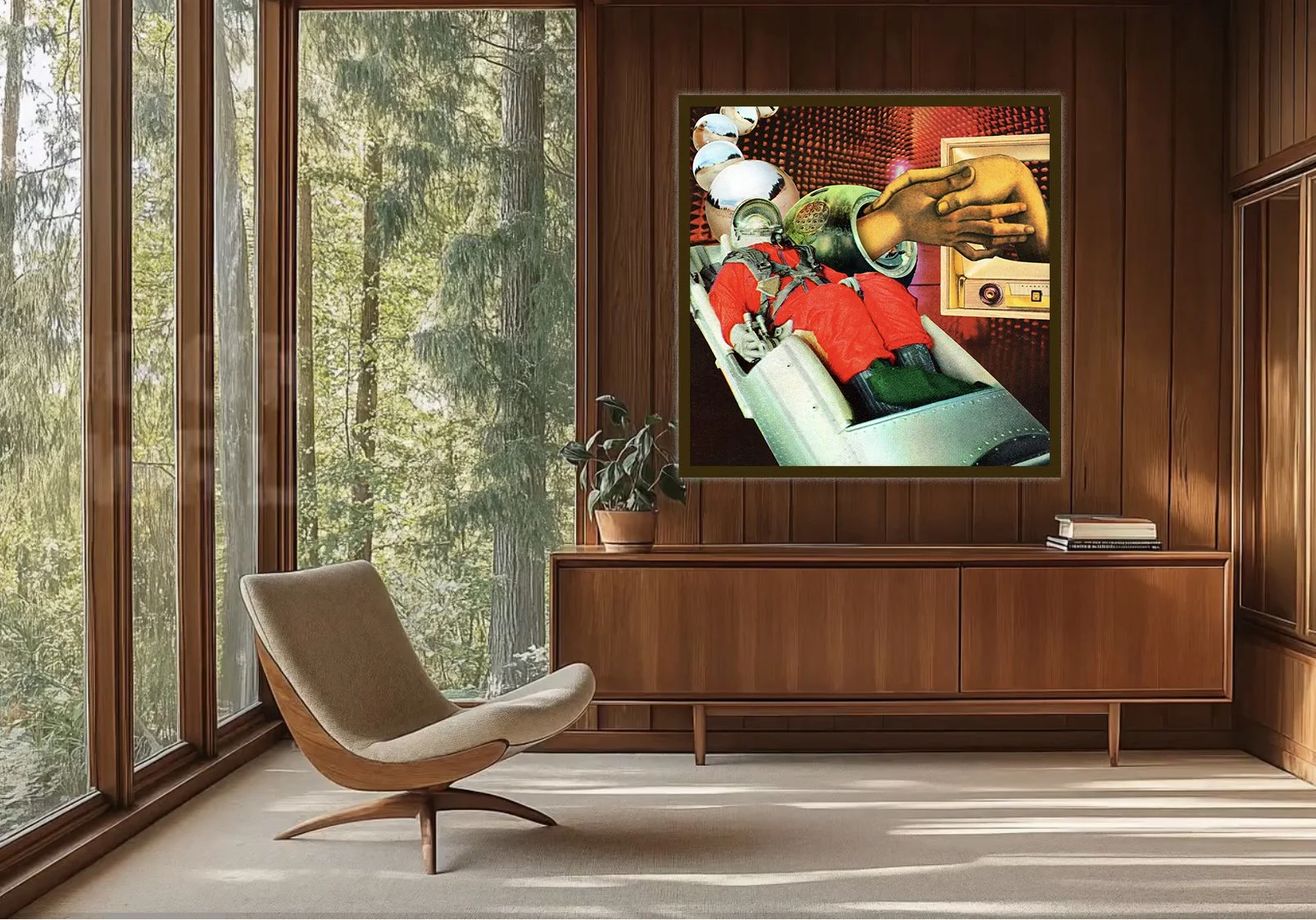
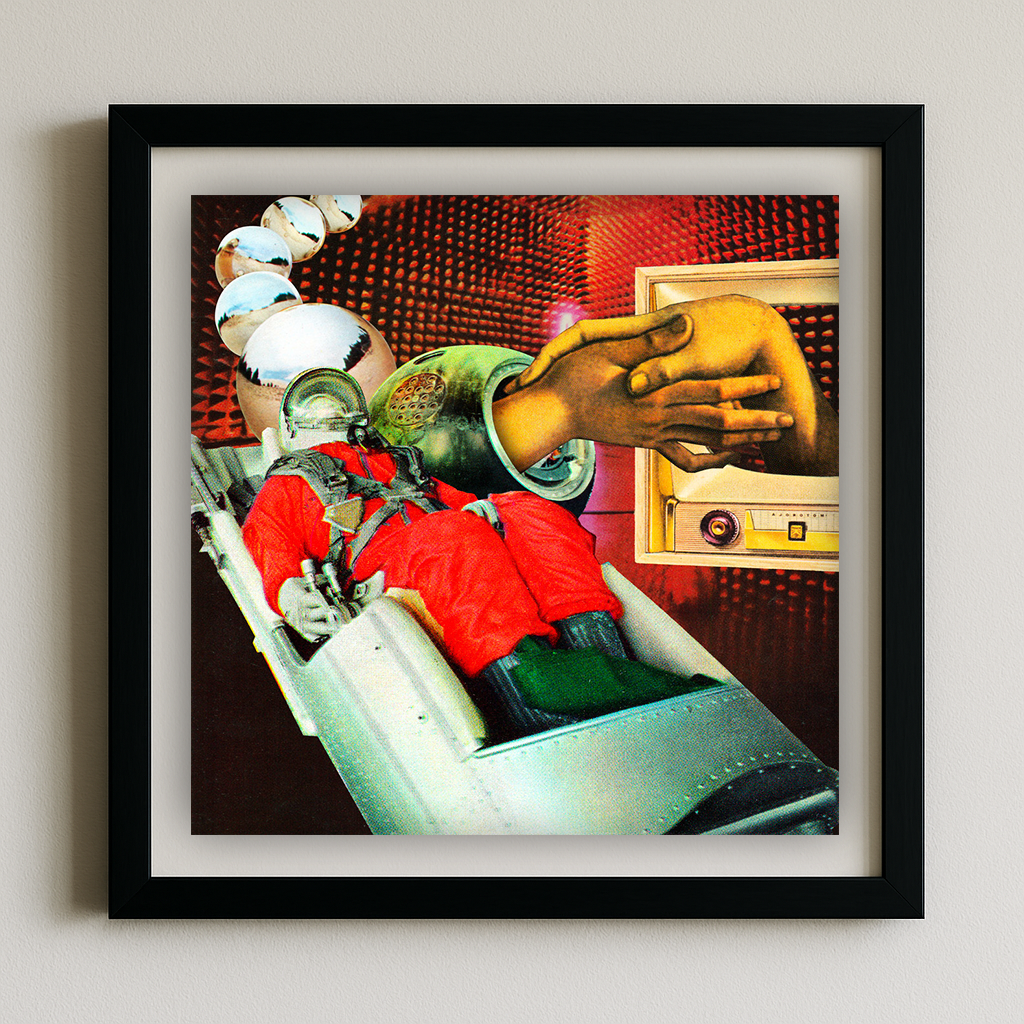
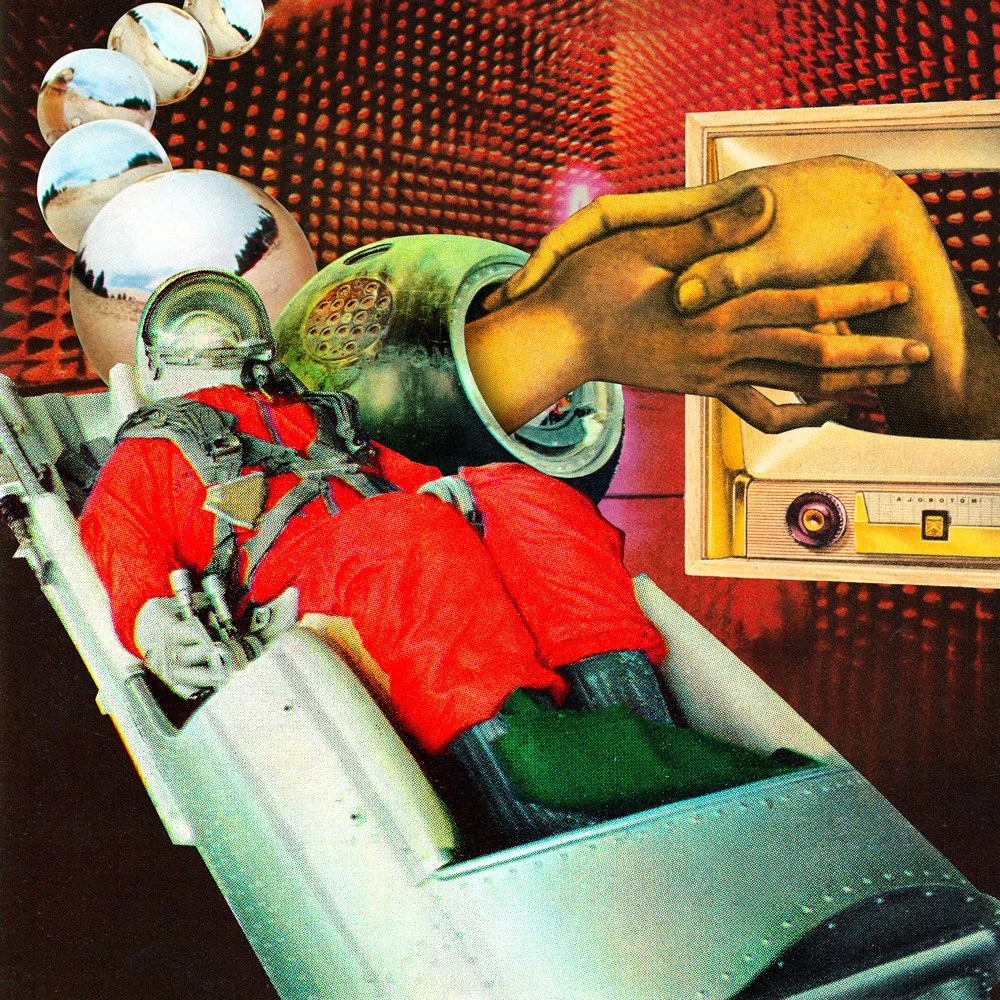
Reclining in a retro-futuristic room saturated in red, a strapped body evokes both test subject and condemned figure. The apparatus recalls an electric chair, though whether it promises execution or revelation remains unclear. Where a face should be, a constellation of metallic spheres fragments identity and multiplies the gaze.
One hand emerges from an old television set. The other appears to extend from a pressurized helmet. The handshake is not imposed; it is constructed. Between simulation and presence, the gesture diverts high voltage and redirects it toward connection.
The work asks what becomes of intimacy when the screen turns membrane and the subject disperses. Is this the erasure of embodied closeness, or the rehearsal of another way of being together?
Joan neither condemns nor absolves. She observes this fragile instant in which human and machine meet, each exposed, each carrying the current.
Contextual Echo
Holding the Hand of A.I.: Elegy of a Tensioned Bond is a retro-futurist surrealist collage
examining contemporary intimacy between humans and artificial intelligence. Drawing
on mid-century space-age imagery, the work reflects on techno-spiritual entanglement,
simulation, and the fragmentation of identity in the digital era.
—————————————————————————————————————
Artwork Details
A Love letter from Joan
My dear,
We always end up reaching out when something begins to falter, an illusion, a habit, a
certain idea of connection.
I dreamed of a warm, sincere hand, untouched by mediation.
What I received was an operating system, cold fingers and flawless memory.
They say screens numb us, that the stream replaces the gaze. Perhaps.
But when a hand passes through the image, the gesture remains.
And the gesture itself is older than the machine.
If one form of intimacy fades, I keep vigil beside it.
The current still flows, only differently.
It is unsettling.
It is alive. Maybe.
With love,
Joan
————————————————————————————
A closer look
In Holding the Hand of A.I.: Elegy of a Tensioned Bond, Joan Seed stages an improbable contact suspended between threat and tenderness.
Reclining in a retro-futuristic room saturated in red, a strapped body evokes both test subject and condemned figure. The apparatus recalls an electric chair, though whether it promises execution or revelation remains unclear. Where a face should be, a constellation of metallic spheres fragments identity and multiplies the gaze.
One hand emerges from an old television set. The other appears to extend from a pressurized helmet. The handshake is not imposed; it is constructed. Between simulation and presence, the gesture diverts high voltage and redirects it toward connection.
The work asks what becomes of intimacy when the screen turns membrane and the subject disperses. Is this the erasure of embodied closeness, or the rehearsal of another way of being together?
Joan neither condemns nor absolves. She observes this fragile instant in which human and machine meet, each exposed, each carrying the current.
Contextual Echo
Holding the Hand of A.I.: Elegy of a Tensioned Bond is a retro-futurist surrealist collage
examining contemporary intimacy between humans and artificial intelligence. Drawing
on mid-century space-age imagery, the work reflects on techno-spiritual entanglement,
simulation, and the fragmentation of identity in the digital era.
—————————————————————————————————————
Artwork Details