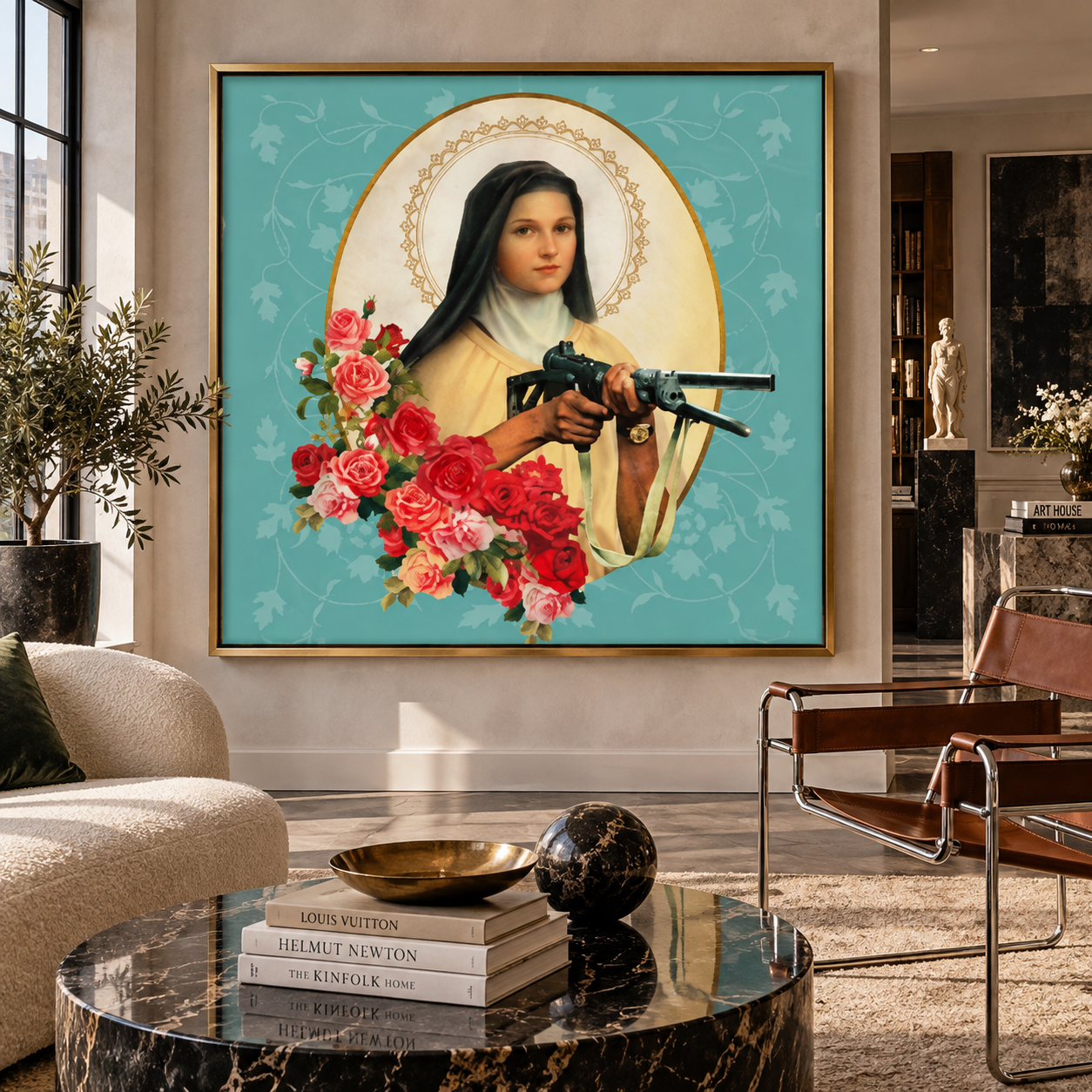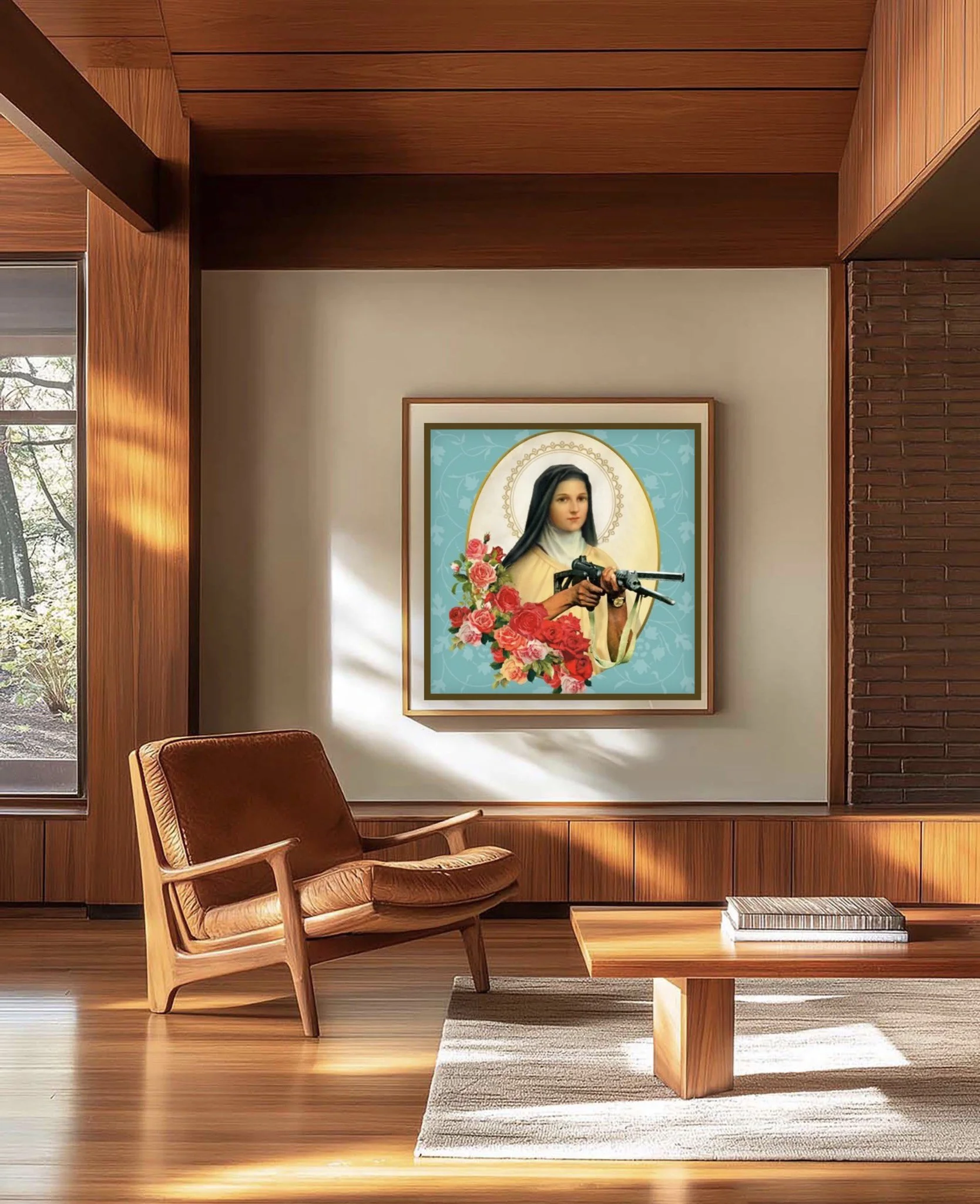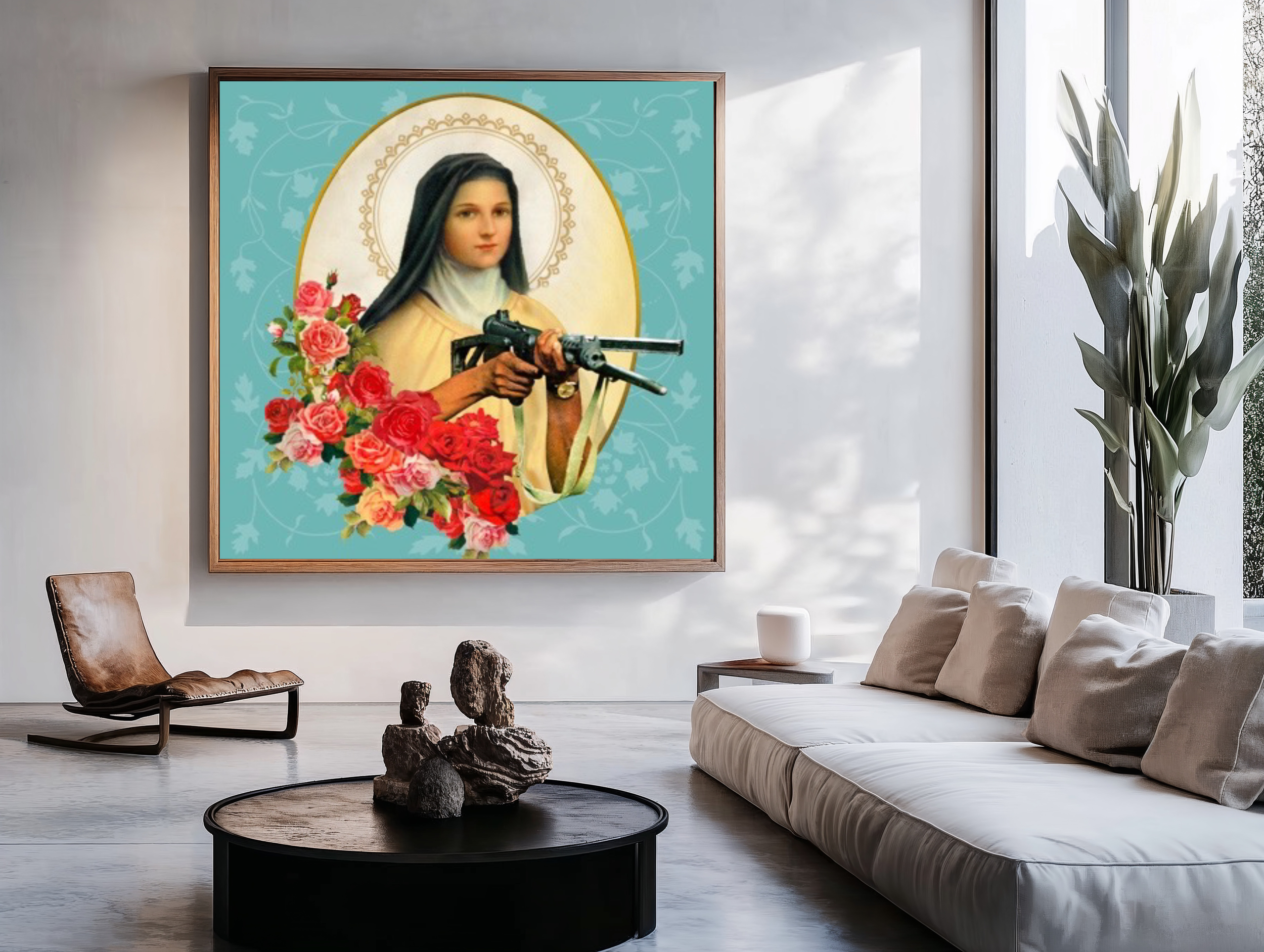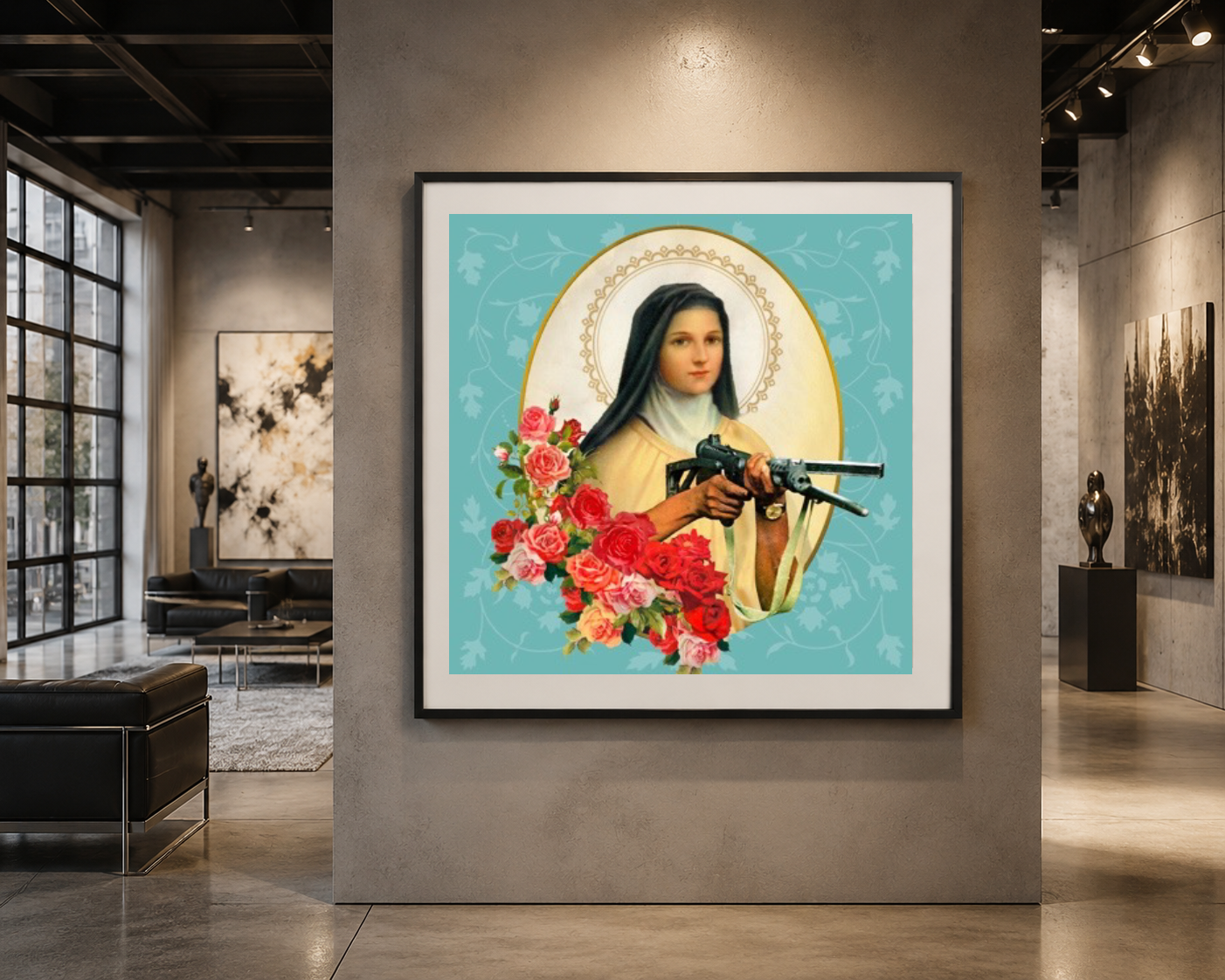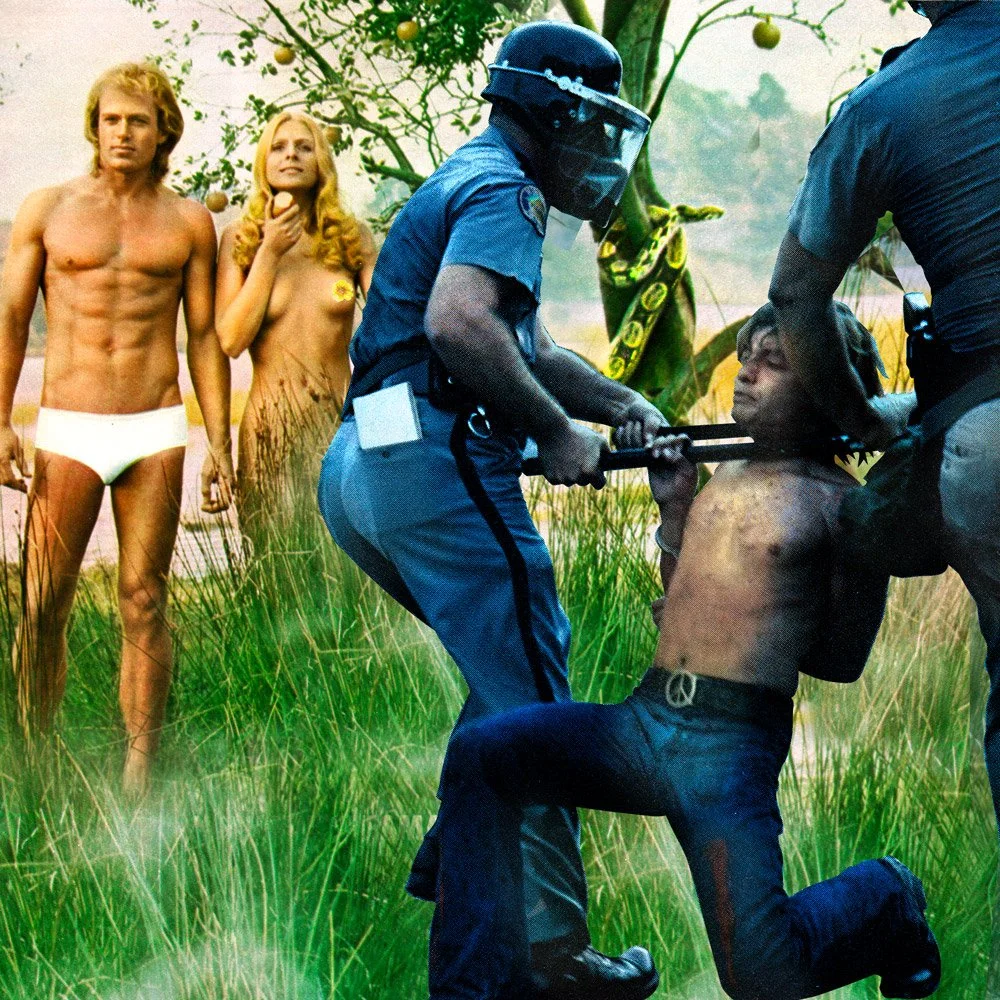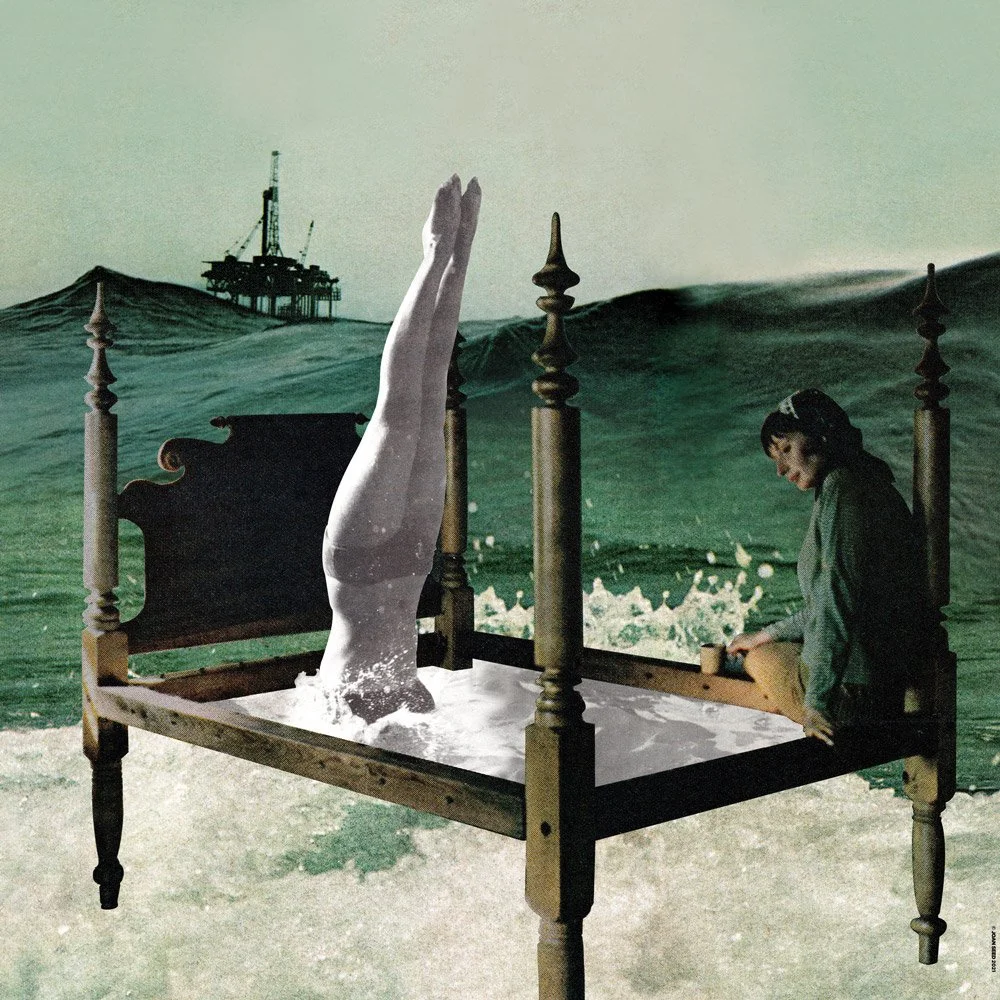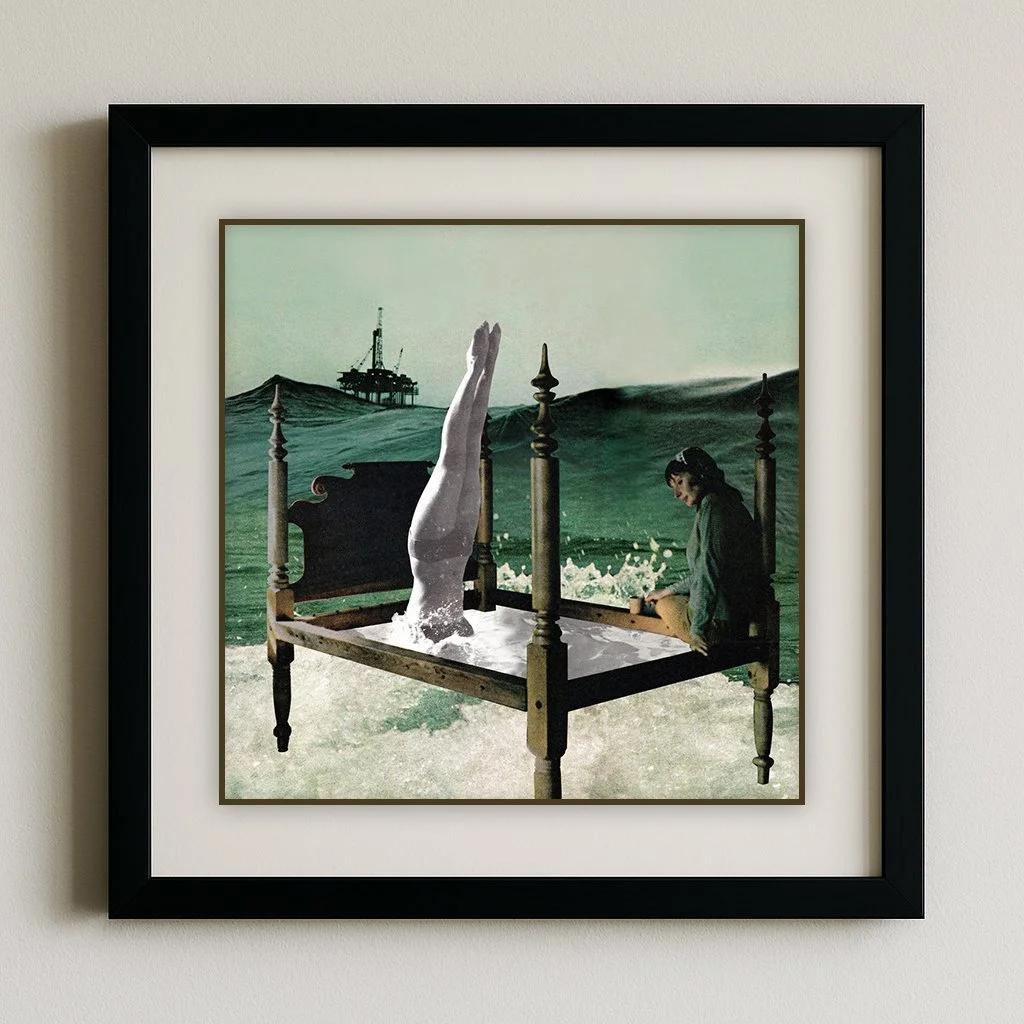
Symbolist forest Psychedelic dreamlike wall art by Joan Seed
A Letter from Joan:
My dear,
I ran into our old fork-tongued friend again.
You know what I like about him? He never promises paradise—only artificial ones. That's probably why we get along so well. And you know me... I've always preferred bad company to false prophets.
We both have a rather scandalous reputation. His goes all the way back to Genesis. Mine is much more recent, thankfully.
He gets away with shedding his skin. I've tried just about everything else. I know, it hasn't always been pretty. But that good old snake still hisses when I walk by.
Oh, before I forget... shall we book ourselves a peeling?
Take care until then.
Joan
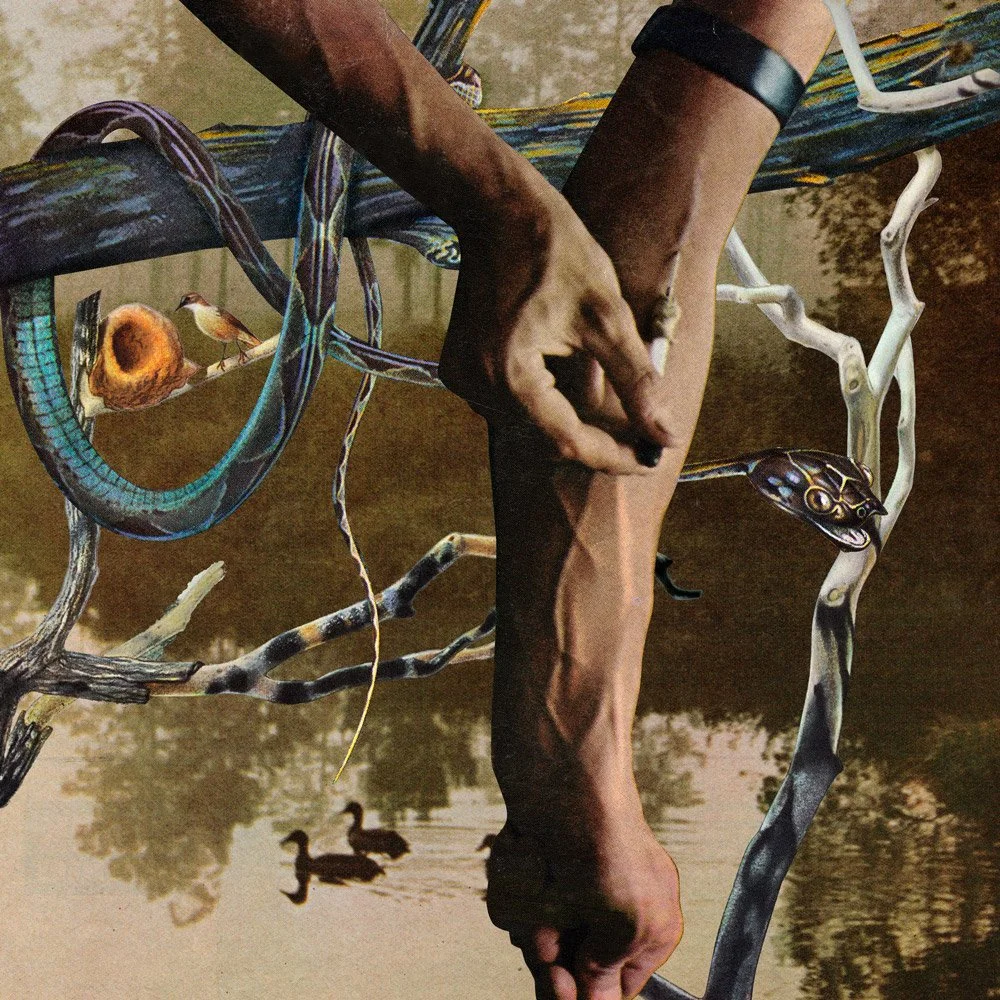
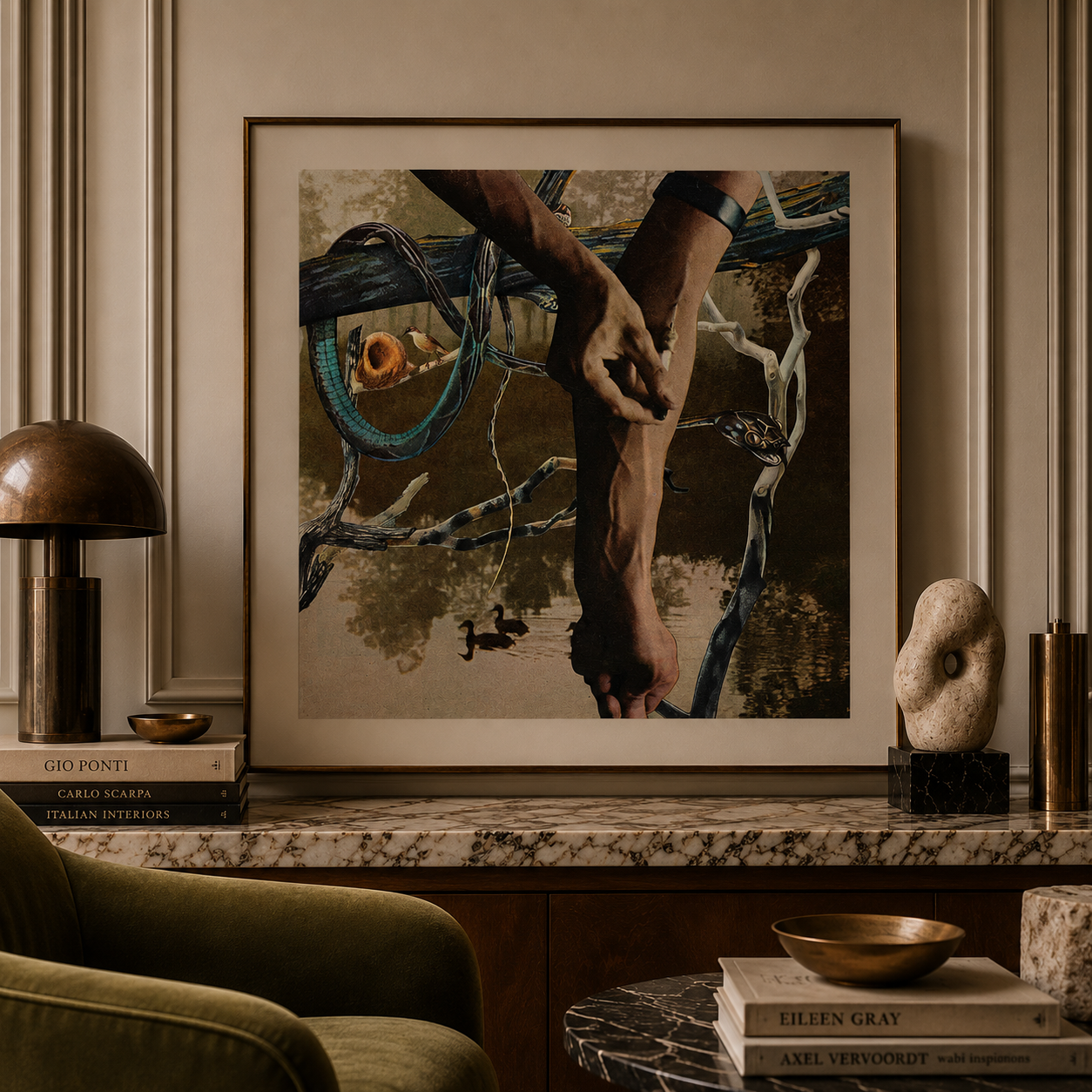
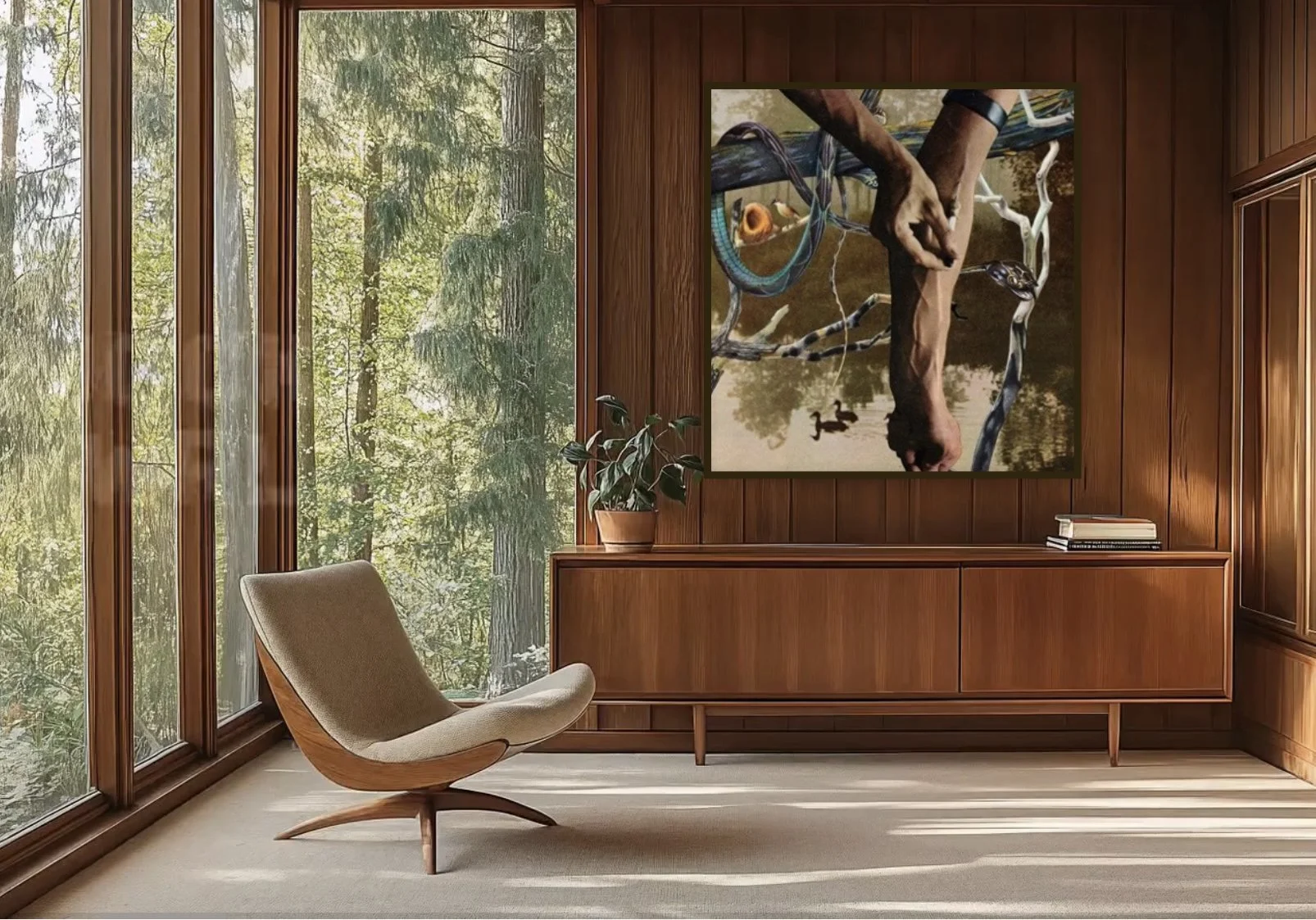
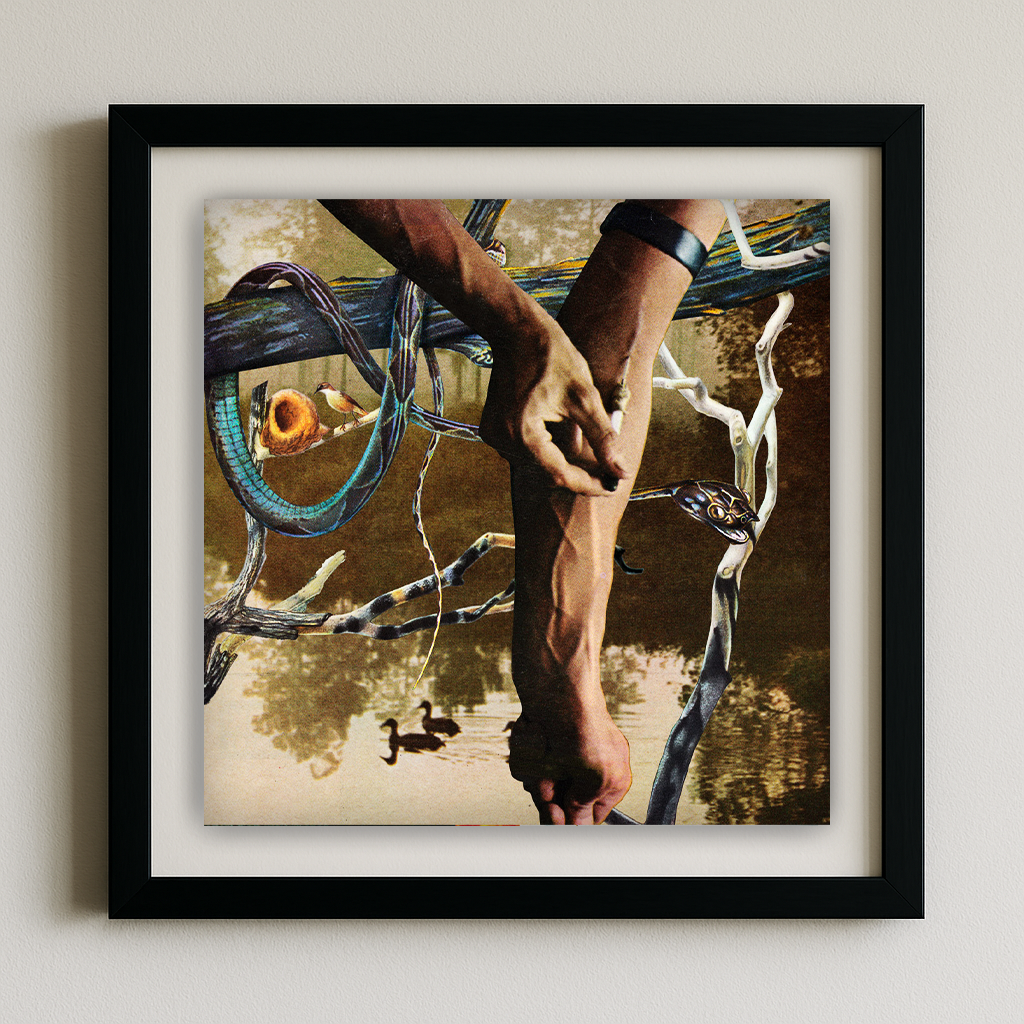
At first glance, Ride the Snake seems to explore drug use. A veined arm is poised to receive an injection, while a forest of intertwined branches and snakes spreads across the composition. The title itself may evoke The Doors’ The End, where the phrase Ride the snake accompanies a journey as mesmerizing as it is perilous into the depths of consciousness. The parallel becomes all the more suggestive given that, in both worlds, a body of water seems to await at the journey’s end. Yet, compelling as this reading may initially appear, the work leaves room for doubt.
Nothing indicates with certainty that the injection is administering a psychotropic substance. It could just as easily be delivering medication or an intravenous treatment. That subtle shift profoundly transforms the image. The snake is no longer associated solely with danger or altered states of consciousness. Since antiquity, it has also been a companion to healing. Coiled around the staff of Asclepius, the Greek god of medicine, or the bowl of his daughter Hygieia—an emblem of pharmacy in many countries—it remains one of the most enduring symbols of care.
For millennia, however, the snake has embodied far more than healing alone. At times protector, at times tempter, associated equally with the depths of the earth and the light of the sun, it has come to represent healing and danger, knowledge and death, even rebirth itself. That promise of renewal quietly surfaces throughout the collage, from dead branches that seem to awaken as they transform into living forms to the nest silently awaiting new life. It is present as well in the snake’s shedding of its skin, an ancient image of transformation and renewal. Perhaps it is precisely this ability to unite realities we instinctively separate that has made the snake such a powerful companion to the human imagination.
From the Garden of Eden to the agathos daimon—the benevolent household spirit that often appeared in the form of a snake and watched over homes throughout the ancient world, particularly in Pompeii—to Kipling’s mesmerizing Kaa in The Jungle Book, cultures have continually rediscovered the symbolic richness of this ancient figure. Each era and each tradition has found in it a way of thinking about its own anxieties, hopes, and relationship to the world. The snake is endlessly reborn within the human imagination.
By allowing branches, veins, and snakes to enter into dialogue, Joan Seed’s work joins this long conversation in its own way. It allows the snake’s many symbolic identities to coexist without reducing them to a single meaning. What if, through this ancient companion, Joan Seed were inviting us to recognize the winding paths of our own human experience?
-Louis Morency
Ride the Snake belongs to a long artistic and cultural tradition in which the snake serves as a powerful symbol of transformation, healing, temptation, rebirth, and knowledge. Beginning with an image that initially evokes psychotropic drugs and altered states of consciousness, Joan Seed gradually broadens the reflection to embrace the serpent’s rich symbolic legacy.
Through this collage, the artist explores the complex relationships between healing and danger, fragility and transformation. Resisting any single interpretation, the work invites viewers to consider how enduring symbols continue to shape our relationship with the world and with the fundamental questions of human experience.
Artwork Details
Haut du formulaire
Title: Ride the Snake
Artist: Joan Seed
Medium: Mixed Media Collage
Limited edition prints, hand-signed and numbered
Material: Museum-grade giclée print on archival, textured cotton paper
Size Options:
• 30 × 30 inches (76.2 × 76.2 cm)
• 60 × 60 inches (152.4 × 152.4 cm)
Shipping: Flat rate of $175 CAD per order.
For acquisitions, inquiries, and commissions: joan@joanseed.ca
© 2026 Joan Seed. All rights reserved. This artwork and its images may not be reproduced, copied, distributed, or used in any form without the prior written permission of the artist.
A Letter from Joan:
My dear,
I ran into our old fork-tongued friend again.
You know what I like about him? He never promises paradise—only artificial ones. That's probably why we get along so well. And you know me... I've always preferred bad company to false prophets.
We both have a rather scandalous reputation. His goes all the way back to Genesis. Mine is much more recent, thankfully.
He gets away with shedding his skin. I've tried just about everything else. I know, it hasn't always been pretty. But that good old snake still hisses when I walk by.
Oh, before I forget... shall we book ourselves a peeling?
Take care until then.
Joan
At first glance, Ride the Snake seems to explore drug use. A veined arm is poised to receive an injection, while a forest of intertwined branches and snakes spreads across the composition. The title itself may evoke The Doors’ The End, where the phrase Ride the snake accompanies a journey as mesmerizing as it is perilous into the depths of consciousness. The parallel becomes all the more suggestive given that, in both worlds, a body of water seems to await at the journey’s end. Yet, compelling as this reading may initially appear, the work leaves room for doubt.
Nothing indicates with certainty that the injection is administering a psychotropic substance. It could just as easily be delivering medication or an intravenous treatment. That subtle shift profoundly transforms the image. The snake is no longer associated solely with danger or altered states of consciousness. Since antiquity, it has also been a companion to healing. Coiled around the staff of Asclepius, the Greek god of medicine, or the bowl of his daughter Hygieia—an emblem of pharmacy in many countries—it remains one of the most enduring symbols of care.
For millennia, however, the snake has embodied far more than healing alone. At times protector, at times tempter, associated equally with the depths of the earth and the light of the sun, it has come to represent healing and danger, knowledge and death, even rebirth itself. That promise of renewal quietly surfaces throughout the collage, from dead branches that seem to awaken as they transform into living forms to the nest silently awaiting new life. It is present as well in the snake’s shedding of its skin, an ancient image of transformation and renewal. Perhaps it is precisely this ability to unite realities we instinctively separate that has made the snake such a powerful companion to the human imagination.
From the Garden of Eden to the agathos daimon—the benevolent household spirit that often appeared in the form of a snake and watched over homes throughout the ancient world, particularly in Pompeii—to Kipling’s mesmerizing Kaa in The Jungle Book, cultures have continually rediscovered the symbolic richness of this ancient figure. Each era and each tradition has found in it a way of thinking about its own anxieties, hopes, and relationship to the world. The snake is endlessly reborn within the human imagination.
By allowing branches, veins, and snakes to enter into dialogue, Joan Seed’s work joins this long conversation in its own way. It allows the snake’s many symbolic identities to coexist without reducing them to a single meaning. What if, through this ancient companion, Joan Seed were inviting us to recognize the winding paths of our own human experience?
-Louis Morency
Ride the Snake belongs to a long artistic and cultural tradition in which the snake serves as a powerful symbol of transformation, healing, temptation, rebirth, and knowledge. Beginning with an image that initially evokes psychotropic drugs and altered states of consciousness, Joan Seed gradually broadens the reflection to embrace the serpent’s rich symbolic legacy.
Through this collage, the artist explores the complex relationships between healing and danger, fragility and transformation. Resisting any single interpretation, the work invites viewers to consider how enduring symbols continue to shape our relationship with the world and with the fundamental questions of human experience.
Artwork Details
Haut du formulaire
Title: Ride the Snake
Artist: Joan Seed
Medium: Mixed Media Collage
Limited edition prints, hand-signed and numbered
Material: Museum-grade giclée print on archival, textured cotton paper
Size Options:
• 30 × 30 inches (76.2 × 76.2 cm)
• 60 × 60 inches (152.4 × 152.4 cm)
Shipping: Flat rate of $175 CAD per order.
For acquisitions, inquiries, and commissions: joan@joanseed.ca
© 2026 Joan Seed. All rights reserved. This artwork and its images may not be reproduced, copied, distributed, or used in any form without the prior written permission of the artist.
Symbolist forest Psychedelic dreamlike wall art by Joan Seed